

follow ft86club on our blog, twitter or facebook.
FT86CLUB
Ft86Club
Speed By Design
Register Garage Community Calendar Today's Posts Search

Go Back   Toyota GR86, 86, FR-S and Subaru BRZ Forum & Owners Community - FT86CLUB > Technical Topics > Forced Induction

Forced Induction Turbo, Supercharger, Methanol, Nitrous

Register and become an FT86Club.com member. You will see fewer ads

Reply
 
Thread Tools Search this Thread
Old 12-22-2015, 11:17 AM   #15
jwvand02
Senior Member
 
Join Date: Apr 2014
Drives: 2013 SWP BRZ Limited
Location: Louisville, KY
Posts: 159
Thanks: 12
Thanked 47 Times in 34 Posts
Mentioned: 2 Post(s)
Quote:
Originally Posted by FRS Justin View Post
Another thing to consider that a lot of people overlook is where the power comes from and the cost associated with it.


Since a turbo makes its power by using exhaust it's basically free power.


On a S/C it's made from tapping in on to the crank to cause the boosted condition. So your hp increase cost you hp to make hp. That will also cost you accelerated wear on the engine. ( front crank bearing will post links if needed) ( I should also add it was more common on the older S/C with big wide belts. In current days the crank wear has been minimized by belt tensioner designs and belt width in the more modern design of the S/C)


Definitely S/C have their place in the market or they would have been scrapped decades ago, but the age old debate of which is better boils down to your personal choice of what will work better in a given necessity.


A turbo will cost you more initially to setup (approx. a 1000 to 1500 in this case) but is easier to maintain. So if a easier install with you having to service the S/C with belts and oil changes works for you go that way. If you just want to shut the hood and go, run a turbo.


They both are going to make power, both are tunable, so it boils down to what you feel works best for you. good luck either way your going to be happy with the end result
The whole "where the power comes from" is a fallacious argument. The end result is you're still paying x dollars for y power gain, and it doesn't really matter how you get there from that perspective. The only part that's really salient in that argument is one that you didn't mention, which is impact on fuel economy, in which a really well tuned turbo will typically do better from an economy standpoint when you're not winding the motor out.

Turbos are also typically less fool-proof, they're not as easy to install for a DIYer and have more points of failure. They also typically have non-reversible steps, such as drilling and tapping the oil pan. The end result is that the cars take more work to sell and you have a better (if still minimal) chance of catastrophically damaging the car. Most of this is no big deal to someone who is experienced in working on FI cars and has the money and time to put into it, but for just a hobbyist a SC is often the better way to go for that reason alone.

I personally chose SC because I feel like it's the easiest and cheapest way to get to the sweet spot for the 86, but only because I have ready access to E85. If I didn't have easy access to E85, I probably would have gone turbo. I still miss my turbo car though, because even though I think they're less practical there's something I actually sort of enjoy about turbo lag
jwvand02 is offline   Reply With Quote
Old 12-22-2015, 11:29 AM   #16
bfrank1972
Senior Member
 
Join Date: Jul 2013
Drives: 2013 FR-S Argento
Location: Westport,CT
Posts: 1,855
Thanks: 517
Thanked 1,041 Times in 616 Posts
Mentioned: 7 Post(s)
Quote:
Originally Posted by jwvand02 View Post
The whole "where the power comes from" is a fallacious argument. The end result is you're still paying x dollars for y power gain, and it doesn't really matter how you get there from that perspective.
Not completely true - take two cases, powering a sprintex 335 to get to 350rwhp at 6000 rpm and a turbo to get to 350rwhp at 6000 rpm. Spinning the sprintex at high rpms will take quite a bit of HP, let's say 40rwhp. So to get there, the sprintex & motor will have to flow enough to cpver that extra 40 at 6000 rpm. To Justin's point, the turbo will have some losses in the form of backpressure on the motor when pushing the turbine hard, but in the end there it won't have to flow as much air through the motor to make 350hp at the wheels. Does that make sense?
bfrank1972 is offline   Reply With Quote
The Following User Says Thank You to bfrank1972 For This Useful Post:
FRS Justin (12-22-2015)
Old 12-22-2015, 11:47 AM   #17
mrk1
Senior Member
 
Join Date: Mar 2013
Drives: Sterling BRZ Ltd
Location: New England
Posts: 1,702
Thanks: 403
Thanked 1,389 Times in 671 Posts
Mentioned: 21 Post(s)
Quote:
Originally Posted by bfrank1972 View Post
Yes you can have really optimized turbo systems, like BMW's have, but most aftermarket kits always have at least a little bit of lag. Not necessarily terrible, but some prefer the razor sharp response of a well tuned supercharger.
There is no snake oil magic about BMW turbos, if you want razor sharp response from an aftermarket turbo it can be done. You will have to make compromises to gain that response but thats all in the setup. If you compare engine size to turbo size of an OEM setup the turbos are pretty small compared to aftermarket setups. Thats because aftermarket kits want more HP and made the compromise on response.

If someone came to me looking for a turbo kit and was ok with SC level HP output then response and low end power would be the focus and would be killer! This however is not a goal of most so your off the shelf turbo kits won't do this.

My problem with SC is that it can never spin up faster then the engine, sure there is gear reduction to whatever degree but at the end of the day its a fixed ratio resulting in X boost at X rpm. Turbo is free to go above and beyond.
__________________
The Build Thread

GT28RS - eBoost2 - 3.91 Final Drive - Supra LSD
mrk1 is offline   Reply With Quote
The Following User Says Thank You to mrk1 For This Useful Post:
FRS Justin (12-22-2015)
Old 12-22-2015, 12:10 PM   #18
bfrank1972
Senior Member
 
Join Date: Jul 2013
Drives: 2013 FR-S Argento
Location: Westport,CT
Posts: 1,855
Thanks: 517
Thanked 1,041 Times in 616 Posts
Mentioned: 7 Post(s)
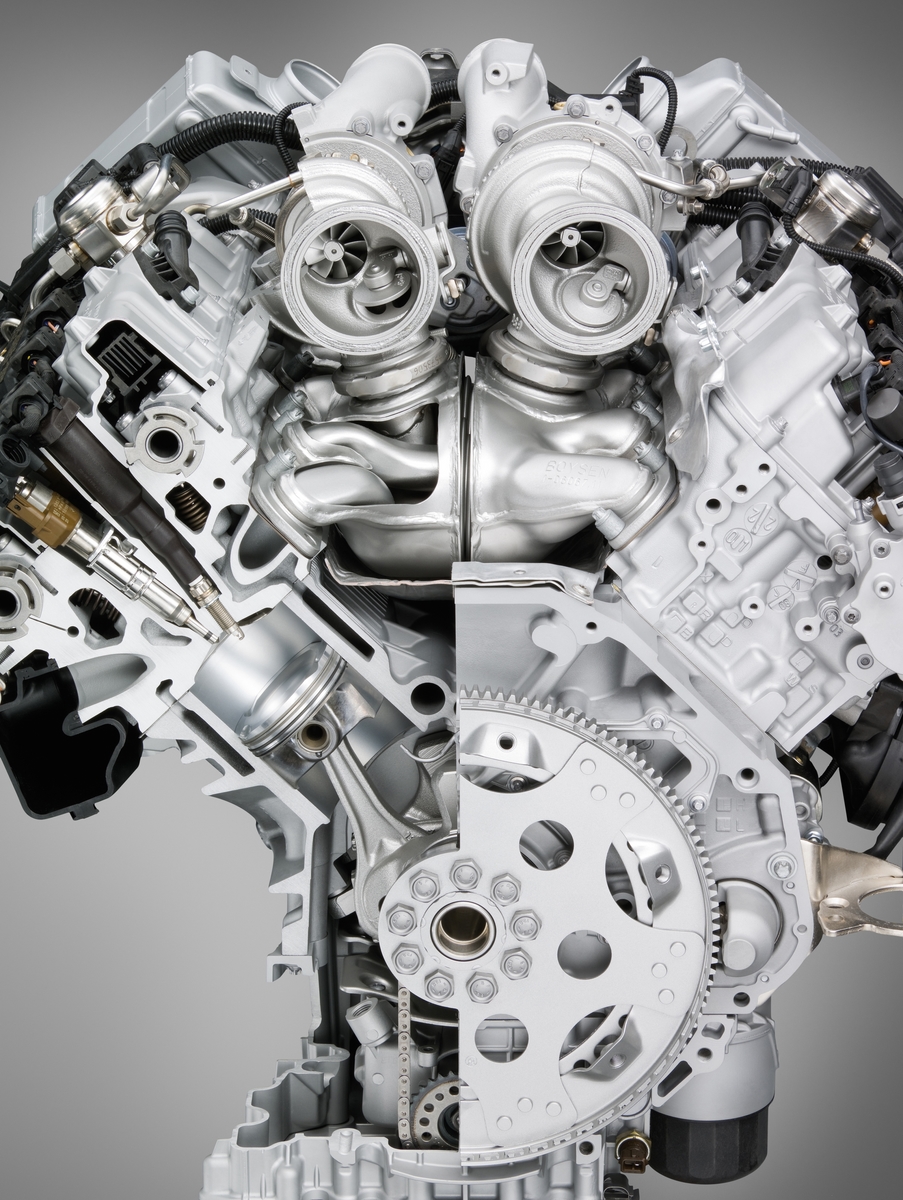
Well... snake oil no, but they do have some advantages - they have freedom of engineering the entire powerplant as a package. I get what you're saying, but they're able to optimize the entire system & packaging. For example, see below
bfrank1972 is offline   Reply With Quote
The Following 2 Users Say Thank You to bfrank1972 For This Useful Post:
CSG Mike (12-24-2015), Tristor (04-21-2019)
Old 12-22-2015, 12:21 PM   #19
mrk1
Senior Member
 
Join Date: Mar 2013
Drives: Sterling BRZ Ltd
Location: New England
Posts: 1,702
Thanks: 403
Thanked 1,389 Times in 671 Posts
Mentioned: 21 Post(s)
I can hear the "heat weines" complaining about that now haha

But yes I see what your saying and your right the aftermarket will never do it on a production scale.
__________________
The Build Thread

GT28RS - eBoost2 - 3.91 Final Drive - Supra LSD
mrk1 is offline   Reply With Quote
Old 12-22-2015, 01:35 PM   #20
jwvand02
Senior Member
 
Join Date: Apr 2014
Drives: 2013 SWP BRZ Limited
Location: Louisville, KY
Posts: 159
Thanks: 12
Thanked 47 Times in 34 Posts
Mentioned: 2 Post(s)
Quote:
Originally Posted by bfrank1972 View Post
Not completely true - take two cases, powering a sprintex 335 to get to 350rwhp at 6000 rpm and a turbo to get to 350rwhp at 6000 rpm. Spinning the sprintex at high rpms will take quite a bit of HP, let's say 40rwhp. So to get there, the sprintex & motor will have to flow enough to cpver that extra 40 at 6000 rpm. To Justin's point, the turbo will have some losses in the form of backpressure on the motor when pushing the turbine hard, but in the end there it won't have to flow as much air through the motor to make 350hp at the wheels. Does that make sense?
No, you're right, and I get it. What I'm saying is that doesn't really matter. At the end of the day, 350whp is 350whp no matter how you get there. The difference really comes in the delivery of the power and the fuel economy, so how the power is produced is really a 'why' not a 'what' when it comes to performance outcomes.
jwvand02 is offline   Reply With Quote
The Following User Says Thank You to jwvand02 For This Useful Post:
FRS Justin (12-22-2015)
Old 12-22-2015, 03:13 PM   #21
FRS Justin
Senior Member
 
Join Date: May 2014
Drives: 2013 Asphalt FRS
Location: San Antonio
Posts: 994
Thanks: 693
Thanked 695 Times in 417 Posts
Mentioned: 22 Post(s)
Quote:
Originally Posted by avishenoy1 View Post
Nice post, I think you did a good job of summing up the pros and cons of both options. That being said I think you failed to note the difference between Roots type SC's and Centrifugal blowers. The roots type will require far less maintenance than a centrifugal and probably even less than a turbo.

The Edelbrock kit has a self contained oiling system with a 100,000 mile recommended service interval.

Additionally, I'd like to add that any aftermarket turbo will most definitely cause more wear on the engine due to heat. OEM turbo's are usually placed in a location that minimizes the heat transfer to wear parts on the engine, but pretty much every aftermarket kit for our cars mounts the turbo right in front of the crank pulley.

So basically I would disagree with the argument that a turbo kit places significantly less wear on the engine internals. Turbos get hot, and heat causes problems.
Nice call on the types of S/C that will make a difference I should of elaborated I was just stuck on the comparison I posted earlier, your statement is a solid piece that should be considered.


I understand about Edelbrocks 100k service but I can't even think about waiting that long can you imagine the condition of the oil at 100k YUCK!!!


All your points are spot on. .......


EDIT
__________________
Instagram FT86PROJECT9S
Facebook FT86PROJECT9S
710whp

Last edited by FRS Justin; 12-22-2015 at 03:45 PM.
FRS Justin is offline   Reply With Quote
Old 12-22-2015, 03:19 PM   #22
FRS Justin
Senior Member
 
Join Date: May 2014
Drives: 2013 Asphalt FRS
Location: San Antonio
Posts: 994
Thanks: 693
Thanked 695 Times in 417 Posts
Mentioned: 22 Post(s)
Quote:
Originally Posted by bfrank1972 View Post
Not really free power, a turbo is always an obstruction in the exhaust path, but superchargers will indeed add more load to a motor. Also not sure if mentioned specifically in this thread so far, but transient response is always better with a supercharger. Yes you can have really optimized turbo systems, like BMW's have, but most aftermarket kits always have at least a little bit of lag. Not necessarily terrible, but some prefer the razor sharp response of a well tuned supercharger.
Another excellent point, but it should be noted the only way to get that true instant response on a S/C is to run them in a overdrive ratio which heats up the unit and air charge and reduce the top end efficiency the S/C


Solid points you made
__________________
Instagram FT86PROJECT9S
Facebook FT86PROJECT9S
710whp
FRS Justin is offline   Reply With Quote
Old 12-22-2015, 03:32 PM   #23
xwd
Senior Member
 
Join Date: Feb 2012
Drives: 2013 DGM Subaru BRZ (Subie #9)
Location: ATL, US
Posts: 2,667
Thanks: 123
Thanked 861 Times in 552 Posts
Mentioned: 32 Post(s)
Quote:
Originally Posted by FRS Justin View Post
Nice call on the types of S/C that will make a difference I should of elaborated I was just stuck on the comparison I posted earlier, it is a solid piece that should be considered.


I understand about Edelbrocks 100k service but I can't even think about waiting that long can you imagine the condition of the oil at 100k YUCK!!!


All your points are spot on. .......
Even driven hard and spun faster it would be around 25-30K miles, which is likely several years for most 86 owners, so it's not really valid. Turbo systems are way more complex to initially install as well as maintain. I've had lots of turbo cars and seen quite a few engine failures attributed to turbo oiling issues, wastegate malfunction, boost control issues, or simply turning the boost up higher than you should since it's always an option.

I would edit your post since comparison a centrifugal S/C to a turbo is really comparing a belt driven turbo to an exhaust driven turbo. Even then the transient response of the S/C at 5000 RPM is going to be better than the turbo since the boost it creates is instant, dyno plots don't really tell that story at all.
xwd is offline   Reply With Quote
Old 12-22-2015, 03:33 PM   #24
xwd
Senior Member
 
Join Date: Feb 2012
Drives: 2013 DGM Subaru BRZ (Subie #9)
Location: ATL, US
Posts: 2,667
Thanks: 123
Thanked 861 Times in 552 Posts
Mentioned: 32 Post(s)
Quote:
Originally Posted by FRS Justin View Post
Another excellent point, but it should be noted the only way to get that true instant response on a S/C is to run them in a overdrive ratio which heats up the unit and air charge and reduce the top end efficiency the S/C


Solid points you made
That's not entirely true.
xwd is offline   Reply With Quote
Old 12-22-2015, 03:39 PM   #25
FRS Justin
Senior Member
 
Join Date: May 2014
Drives: 2013 Asphalt FRS
Location: San Antonio
Posts: 994
Thanks: 693
Thanked 695 Times in 417 Posts
Mentioned: 22 Post(s)
Quote:
Originally Posted by jwvand02 View Post
The whole "where the power comes from" is a fallacious argument. The end result is you're still paying x dollars for y power gain, and it doesn't really matter how you get there from that perspective. The only part that's really salient in that argument is one that you didn't mention, which is impact on fuel economy, in which a really well tuned turbo will typically do better from an economy standpoint when you're not winding the motor out.

Turbos are also typically less fool-proof, they're not as easy to install for a DIYer and have more points of failure. They also typically have non-reversible steps, such as drilling and tapping the oil pan. The end result is that the cars take more work to sell and you have a better (if still minimal) chance of catastrophically damaging the car. Most of this is no big deal to someone who is experienced in working on FI cars and has the money and time to put into it, but for just a hobbyist a SC is often the better way to go for that reason alone.

I personally chose SC because I feel like it's the easiest and cheapest way to get to the sweet spot for the 86, but only because I have ready access to E85. If I didn't have easy access to E85, I probably would have gone turbo. I still miss my turbo car though, because even though I think they're less practical there's something I actually sort of enjoy about turbo lag
You make a excellent point in the first paragraph from a consumers point of view, which I did not consider. I was more into the efficiency of the F/I method point of view. So in my opinion it wasn't really a "fallacious" statement, but I can see your point of view, In all 3 paragraphs from a consumers point.
__________________
Instagram FT86PROJECT9S
Facebook FT86PROJECT9S
710whp
FRS Justin is offline   Reply With Quote
Old 12-22-2015, 03:40 PM   #26
FRS Justin
Senior Member
 
Join Date: May 2014
Drives: 2013 Asphalt FRS
Location: San Antonio
Posts: 994
Thanks: 693
Thanked 695 Times in 417 Posts
Mentioned: 22 Post(s)
Quote:
Originally Posted by xwd View Post
That's not entirely true.

please explain
__________________
Instagram FT86PROJECT9S
Facebook FT86PROJECT9S
710whp
FRS Justin is offline   Reply With Quote
Old 12-22-2015, 04:11 PM   #27
FRS Justin
Senior Member
 
Join Date: May 2014
Drives: 2013 Asphalt FRS
Location: San Antonio
Posts: 994
Thanks: 693
Thanked 695 Times in 417 Posts
Mentioned: 22 Post(s)
Quote:
Originally Posted by xwd View Post
Even driven hard and spun faster it would be around 25-30K miles, which is likely several years for most 86 owners, so it's not really valid. Turbo systems are way more complex to initially install as well as maintain. I've had lots of turbo cars and seen quite a few engine failures attributed to turbo oiling issues, wastegate malfunction, boost control issues, or simply turning the boost up higher than you should since it's always an option.

I would edit your post since comparison a centrifugal S/C to a turbo is really comparing a belt driven turbo to an exhaust driven turbo. Even then the transient response of the S/C at 5000 RPM is going to be better than the turbo since the boost it creates is instant, dyno plots don't really tell that story at all.
I'm trying to see this thru your eyes and I'm not understanding your post 100%. I have seen some of the points listed for failure on both Turbo and S/C so I consider them both to be able to fail equally in given examples. As far as level of difficulty for install that entirely is on the person doing it, Example I know techs that are fuel injection wizards but put a carb in front of them and they are lost. It's all in what your familiar with.
As far as response of a F/I setup, that is entirely based on tuning of the F/I product while the big name S/C companies have done a fairly good job on this a turbo can be tuned to respond the same based on design. Pipe sizing and Exhaust housing sizing Impeller sizing all go into making a system work well or not at all.


I do appreciate your input, it help me come to a conclusion that I never thought about. As far as how others perceive there choice in F/I systems and why.
__________________
Instagram FT86PROJECT9S
Facebook FT86PROJECT9S
710whp
FRS Justin is offline   Reply With Quote
Old 12-22-2015, 04:15 PM   #28
bfrank1972
Senior Member
 
Join Date: Jul 2013
Drives: 2013 FR-S Argento
Location: Westport,CT
Posts: 1,855
Thanks: 517
Thanked 1,041 Times in 616 Posts
Mentioned: 7 Post(s)
Quote:
Originally Posted by jwvand02 View Post
No, you're right, and I get it. What I'm saying is that doesn't really matter. At the end of the day, 350whp is 350whp no matter how you get there. The difference really comes in the delivery of the power and the fuel economy, so how the power is produced is really a 'why' not a 'what' when it comes to performance outcomes.
Hah I do get your viewpoint - but I guess what I was getting to is stress on the motor - it has to work harder to put down 350rwhp than the turbo car. I was completely oblivious to this point until I joined in a thread with Moto Mike a while back. He sort of illustrated it to me - the motor has to work to produce 350hp at the rear wheels AND take on turning those rotors on top of the motor. Just for example, let's say mechanical failure rate for rods and/or pistons increases dramatically around 425 ft-lbs at the crank. The turbo car putting down 350rwhp will have a lot more headroom than the supercharged car.
bfrank1972 is offline   Reply With Quote
The Following 2 Users Say Thank You to bfrank1972 For This Useful Post:
FRS Justin (12-22-2015), jwvand02 (12-22-2015)
 
Reply


Posting Rules
You may not post new threads
You may not post replies
You may not post attachments
You may not edit your posts

BB code is On
Smilies are On
[IMG] code is On
HTML code is Off

Forum Jump

Similar Threads
Thread Thread Starter Forum Replies Last Post
Supercharger vs Turbocharger Comparison Zan Forced Induction 33 09-26-2015 02:18 PM
My autox, track car, DD, FRS bkblitzed Member's Car Journals 35 12-01-2013 01:52 PM
Comparison between a supercharger and a turbocharger at the same boost level buditjoenawan Forced Induction 50 10-04-2013 02:21 PM
Track and Autox Video Dezoris Tracking / Autocross / HPDE / Drifting 0 05-06-2013 01:38 AM


All times are GMT -4. The time now is 04:33 PM.


Powered by vBulletin® Version 3.8.11
Copyright ©2000 - 2026, vBulletin Solutions Inc.
User Alert System provided by Advanced User Tagging v3.3.0 (Lite) - vBulletin Mods & Addons Copyright © 2026 DragonByte Technologies Ltd.

Garage vBulletin Plugins by Drive Thru Online, Inc.
