


|
||||||
| Engine, Exhaust, Transmission Discuss the FR-S | 86 | BRZ engine, exhaust and drivetrain. |
 |
|
|
Thread Tools | Search this Thread |
 10-23-2013, 06:20 AM |
#29 | |
|
Senior Member
Join Date: Mar 2013
Drives: 2013 FR-S, 2012 MCS
Location: Jax, FL
Posts: 1,975
Thanks: 943
Thanked 570 Times in 356 Posts
Mentioned: 4 Post(s)
|
Quote:
|
|

|

|
|
10-23-2013, 10:12 AM
|
#30 |
|
Senior Member

Join Date: Mar 2013
Drives: Pavement MT GR86
Location: The Berg Oregon
Posts: 959
Thanks: 146
Thanked 208 Times in 151 Posts
Mentioned: 7 Post(s)
|
I forgot the e85 in the first part... Meaning header with e85 w/ custom tune should easily break 30whp added. Since its been done multiple times on 91/92 octane.
So if we assume 165 stock baseline then 195 with header and tune ..205 with e85 added.
__________________
GR86 MT premium
|
|
|
|
|
10-23-2013, 02:10 PM
|
#31 |
|
Banned
Join Date: Mar 2013
Drives: Ultramarine 86 - 6MT
Location: California
Posts: 533
Thanks: 184
Thanked 139 Times in 82 Posts
Mentioned: 1 Post(s)
|
Thanks for your input man. Why do you prefer/suggest an EL header over a UEL header? I am not understanding the technical difference/benefit of EL vs UEL... other than sound output.
|
|
|
|
|
10-23-2013, 02:14 PM
|
#32 |
|
Custom User Title

Join Date: Jun 2012
Drives: Asphalt FR-S MT
Location: Buford, GA/Daytona Beach, FL
Posts: 2,793
Thanks: 395
Thanked 1,182 Times in 697 Posts
Mentioned: 49 Post(s)
|
__________________
 |
|
|
|
|
10-23-2013, 02:37 PM
|
#33 | |
|
Senior Member

Join Date: Sep 2013
Drives: BRZ
Location: SoCal
Posts: 102
Thanks: 12
Thanked 17 Times in 13 Posts
Mentioned: 1 Post(s)
|
Quote:
Here's a good read on exhaust theory written by a Turbo Systems Engineer at Garrett. "N/A cars: As most of you know, the design of turbo exhaust systems runs counter to exhaust design for n/a vehicles. N/A cars utilize exhaust velocity (not backpressure) in the collector to aid in scavenging other cylinders during the blowdown process. It just so happens that to get the appropriate velocity, you have to squeeze down the diameter of the discharge of the collector (aka the exhaust), which also induces backpressure. The backpressure is an undesirable byproduct of the desire to have a certain degree of exhaust velocity. Go too big, and you lose velocity and its associated beneficial scavenging effect. Too small and the backpressure skyrockets, more than offsetting any gain made by scavenging. There is a happy medium here. For turbo cars, you throw all that out the window. You want the exhaust velocity to be high upstream of the turbine (i.e. in the header). You'll notice that primaries of turbo headers are smaller diameter than those of an n/a car of two-thirds the horsepower. The idea is to get the exhaust velocity up quickly, to get the turbo spooling as early as possible. Here, getting the boost up early is a much more effective way to torque than playing with tuned primary lengths and scavenging. The scavenging effects are small compared to what you'd get if you just got boost sooner instead. You have a turbo; you want boost. Just don't go so small on the header's primary diameter that you choke off the high end. Downstream of the turbine (aka the turboback exhaust), you want the least backpressure possible. No ifs, ands, or buts. Stick a Hoover on the tailpipe if you can. The general rule of "larger is better" (to the point of diminishing returns) of turboback exhausts is valid. Here, the idea is to minimize the pressure downstream of the turbine in order to make the most effective use of the pressure that is being generated upstream of the turbine. Remember, a turbine operates via a pressure ratio. For a given turbine inlet pressure, you will get the highest pressure ratio across the turbine when you have the lowest possible discharge pressure. This means the turbine is able to do the most amount of work possible (i.e. drive the compressor and make boost) with the available inlet pressure. " |
|
|
|
|
|
10-23-2013, 02:50 PM
|
#34 |
|
Custom User Title
Join Date: Jun 2012
Drives: Asphalt FR-S MT
Location: Buford, GA/Daytona Beach, FL
Posts: 2,793
Thanks: 395
Thanked 1,182 Times in 697 Posts
Mentioned: 49 Post(s)
|
My only point is that not everyone wants 450whp. I should have specifically stated that. I personally wouldn't want to go above 250.
I'll read what you have a little later when I have some free time.
__________________
|
|
|
|
|
10-23-2013, 04:10 PM
|
#35 |
|
Custom User Title
Join Date: Jun 2012
Drives: Asphalt FR-S MT
Location: Buford, GA/Daytona Beach, FL
Posts: 2,793
Thanks: 395
Thanked 1,182 Times in 697 Posts
Mentioned: 49 Post(s)
|
@AspenItIs
So I read your little quote, but it only discusses exhaust in a turbo charged application. Isn't it safe to assume that a supercharger would also benefit from the same things (back pressure) a normal N/A would benefit from? Based on what you have above, boost by turbo is a function of exhaust velocity up to the turbo itself. Meanwhile, boost by SC isn't a function of velocity. It is a function of rpm, so finding the ideal exhaust diameter would be the same as finding the ideal diameter of an N/A. Yes or No? 
__________________
|
|
|
|
|
10-23-2013, 04:16 PM
|
#36 |
|
Life to short to be slow!
Join Date: Oct 2012
Drives: Toyota GT86
Location: Puerto Rico
Posts: 793
Thanks: 577
Thanked 299 Times in 203 Posts
Mentioned: 7 Post(s)
|
Ok I will join this debate jajaja.
I have full exhaust, overpipe, no cat, no header and Greddy Intake no Tune 161whp on dynojet and 171 on dinomite... weird right? Now I will tune soon and maybe I will see a decent dyno graph on Mustang, then I will go back to Dinojet and compare. If I dont get 180whp I be very pissed!! Here in Puerto Rico there is no E-85  And I want to get to 200whp NA there is 93 and 100 octane. Like I said 200whp Aspirated enguine will make me happy but nobody have been there yet with bolt ons an no E-85.
__________________
 |
|
|
|
|
10-23-2013, 04:19 PM
|
#37 |
|
Banned
Join Date: Mar 2013
Drives: Ultramarine 86 - 6MT
Location: California
Posts: 533
Thanks: 184
Thanked 139 Times in 82 Posts
Mentioned: 1 Post(s)
|
I am with you as well. Like you, I am only looking for a modest boost upgrade. 450 whp is too much for what I will be using the car for. i.e. predominantly a daily driver. As you also said, around the 250 whp would be perfect, heck even 220-230 whp would be really nice as a DD.
|
|
|
|
|
10-23-2013, 05:44 PM
|
#38 | |
|
Senior Member
Join Date: Sep 2013
Drives: BRZ
Location: SoCal
Posts: 102
Thanks: 12
Thanked 17 Times in 13 Posts
Mentioned: 1 Post(s)
|
Quote:
|
|
|
|
|
|
10-24-2013, 01:36 AM
|
#39 | ||
|
Senior Member
Join Date: Jul 2012
Drives: Passat
Location: East Coast
Posts: 626
Thanks: 331
Thanked 188 Times in 130 Posts
Mentioned: 6 Post(s)
|
Quote:
Quote:

Last edited by Fast_Freddy; 10-24-2013 at 02:06 AM. |
||
|
|
|
|
10-24-2013, 01:51 AM
|
#40 | |
|
Join Date: Jan 2012
Drives: 2013 "AVO Orange" FR-S
Location: Seattle, WA
Posts: 1,067
Thanks: 69
Thanked 2,277 Times in 636 Posts
Mentioned: 108 Post(s)
|
Quote:
So you need to either multiply all the other figures by 1.18%, or subtract that from the Vortech figures. For instance, we made 275whp on a stage 2 kit, so that ends up being around 325hp. |
|
|
|
|
|
10-24-2013, 06:21 AM
|
#41 | |
|
Senior Member
Join Date: Mar 2013
Drives: Pavement MT GR86
Location: The Berg Oregon
Posts: 959
Thanks: 146
Thanked 208 Times in 151 Posts
Mentioned: 7 Post(s)
|
Quote:
__________________
GR86 MT premium
|
|
|
|
|
|
10-24-2013, 07:23 AM
|
#42 | |
|
Senior Member
Join Date: Mar 2013
Drives: 2013 FR-S, 2012 MCS
Location: Jax, FL
Posts: 1,975
Thanks: 943
Thanked 570 Times in 356 Posts
Mentioned: 4 Post(s)
|
Quote:
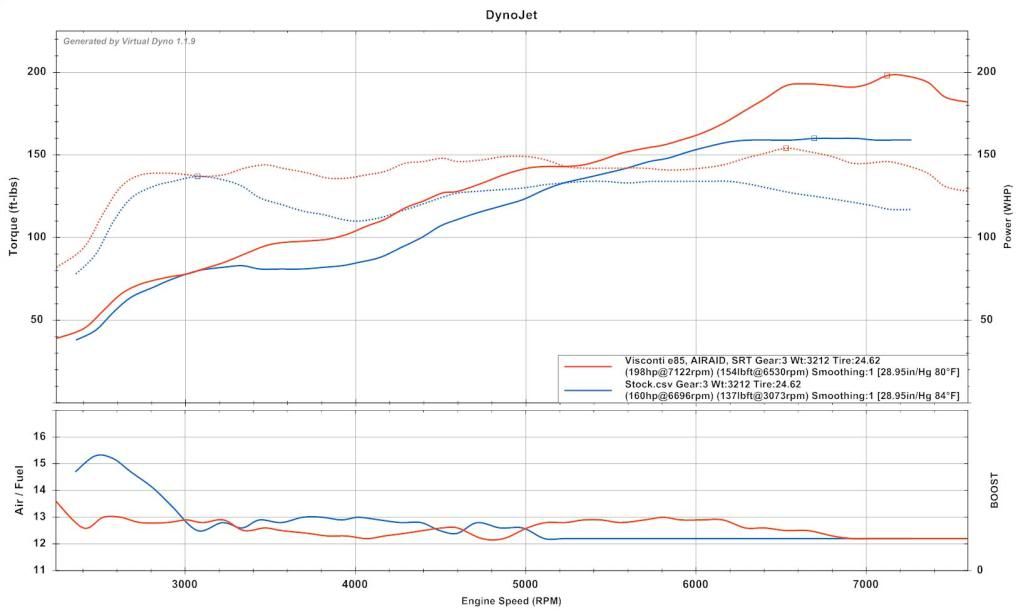 Before header and ~205 after.... |
|
|
|
|
|
|
|
|
|
|


