Quote:
Originally Posted by Sellout

Because boost numbers don't mean much. Might as well be an arbitrary number when you're talking about turbos.
This thread, several posters in it, hell the entire internet make it sound as if there's a magic boost threshold for any given engine where if you stay below that line, you're safe.
It's not that easy. Ever. For any engine. Even for two identical engines made on the same day in the same factory.
Equal powerbands are equally safe for the engine internals, whether you're at low boost and high timing or high boost and low timing. Torque breaks things, fuel washes down cylinder walls, bad tanks of gas blow engines, etc. The boost pressure in the intake manifold is not what determines "safe".
|
this exactly...
the basics...
Your engine can only flow a certain volume of air.
Changing the density doesn't change the volume of air entering the engine.
The density that the air is at, decreases, if you shrink the tubing along the path and increases visa versa.
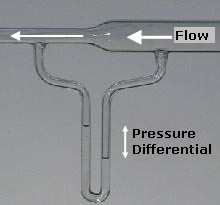
Turbine spool rate: faster is always better depending on the flow rate of that turbo and its threshold. high spool rates signify the efficiency of the turbo. aka needs less exhaust pressure to spool. this in turns lets air leave the engine faster. This decreases the amount of energy the engine has to exert to remove the ignited air and fuel out of the engine.
There are 3 places where energy is used in a natturally asparated combustion engine.
1 to turn the drive shaft
2 to evacuate exhaust gasses
3 pulling in air
this is where turbos help/hurt...
1 air is now being pushed into the combustion chamber
2 more air is available for combustion
but
3 they create more internal heat = loss in power
4 the turbine on the exhaust side creates lots of back pressure and when the air heats up from combustion, the volume of which the air wants to occupy increases dramatically making lots of pressure with the turbo holding it back like a damn behind the turbo. this is why a fast spooling turbo is recommended. air moves out faster and the engine has to do less work to achieve it.
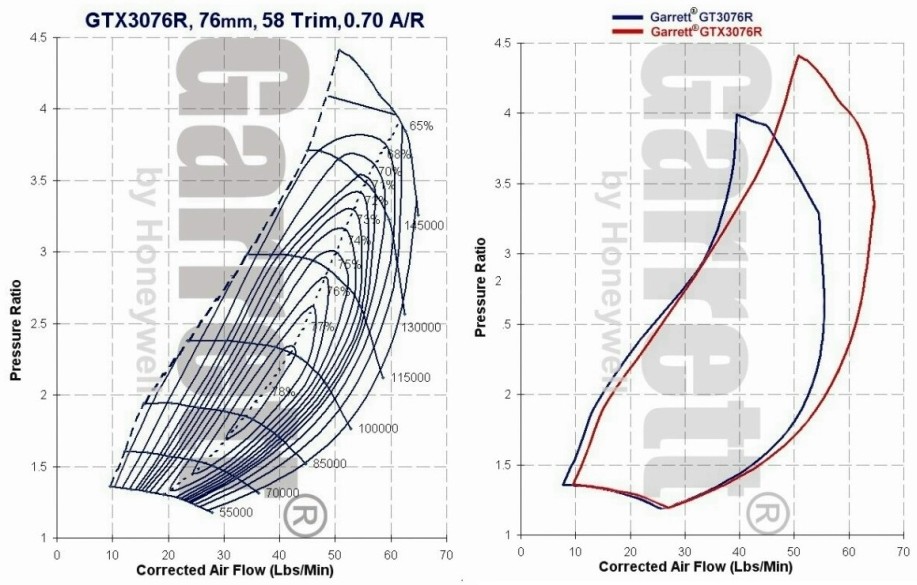
gtx3076R is great turbo for this. Quick spool, high flow rate, and a high threshold
Now that we have the basics done.
reliability
1. measure the air density and flow rate as close to the intake valves as possible, preferably after the throttle body.
2 find a turbo that flows the best vs the amount of hp you want to achieve
too small and your engine/turbo will have to work harder, too big and you will increase lag and back pressure lower in the rpm band
the gtx3076R or comparable turbo is a great mid point, spools fast with lots of room to grow if you need it and you can rev high with it without running our of breath. also with less back pressure you have less heat and your turbo will run cooler during daily driving doing less damage to itself and all components around it.
3 larger intake inlet before the turbo the turbo will be able to flow more with less work = less heat/faster spool times (this is why the PTuning kit works so well with low boost, notice how large that intake pipe is!)

4 a high flow/efficient intercooler. This allows the air to move slower through the intercooler allowing more time for the compressed air to cool. and remember above picture, the larger path compressed air has to move through the denser it is = more power
5 think about getting a larger throttle body as an upgrade at some point to relieve the bottle neck effect of air that reduces air density but not too large that it hurts the flow rate a few mm larger can yield some pretty good gains on a turbo set up. also with a larger opening the air is cooler by the awesome means of physics. when you accelerate air through a confined space it heats up.
6 watch those air fuel ratios, keep them conservative. with the set up above you should be able to make the same power as someone with a less efficient kit that is running more boost and timing and be more reliable than them
7 Turbo placement, is the turbo placed where it can do the least amount of damage as it radiates heat, and is it near a place that has a flow of air to cool it?
8 Oil coolers for the engine/turbo oil and transimission
9 use better oils that have the correct additives for your application and last longer. I personally like 15k mile extended performance M1, track days i like motul.
more reliability!
1 have custom pistons made with the same tolerances in mind as the factory (pretty strict) that are made specifically for your engine's measurements.
2 have water sprayers installed to cool your intercooler for hotter days. (just like STI's

)
3 Titanium valves, springs, and retainers (more heat resistant than stock, but from what I've read the stock valve train is pretty good as is)
4 proper fueling: make sure your running equipment that can exceed what you need so you aren't running your pumps at 100% at redline wearing them out. I've always gone by the rule that the pumps/injectors should be around 60%-75% of their threshold at fuel cut
5 change oil more frequently, like every 2k - 3k miles.( for dd's that never see track time just a bunch of hooning)
even more reliability! (lots more money)
1 get a baffled pan and a dry sump to cure oil starvation
2 sump system in the fuel tank so you don't have fuel starvation issues, if you lean out you could blow up your engine! (accelerated performance is developing a kit!)
3 if you want more power, run e85 and get a flex fuel kit in case you get shit E85 like we do in Texas that not always E85 plus you can just pour 93 when ever you don't feel like running E85 and not have to switch any maps
there's more you can do and there's a million different factors i could go over but i don't feel like typing any more
I hope this clears some things up
so reliably isn't measured in whp
its measured in tq, intake and exhaust temperatures, how efficient the engine flows from the intake to exhaust tips, timing, and are all parts up to the job?
if you build your engine, make it as efficient as possible, and keep up with standard maintenance. I don't see why the engine couldn't last for over 100k miles of daily driving at 400 whp and 200k miles at 280 whp. of course track hours are completely different but it should reflect in the same way.
and to answer the OP question
as long as the kit is efficient, sensors are in their correct place for accurate readings, running a conservative tune and low boost (under 9 psi) your turbo frs/brz/gt86 should last you 100k miles
my last car i modified it to run up to a 9800 rpm redline, beat it for 74k miles putting a grand total of 152k miles on a 12 year old car. and never once had an issue. i raced to work on a bone cold engine ever day during the winter and bounced off that almost 10k fuel cut every day. if you want to turbo. do it right the first time and you'll never regret it.
I'm not turbo yet... why? the parts i want to build my kit with don't exist yet. until the fuel fix with accelerated performance is finished i wont even consider doing my build. good thing flex fuel is though! thanks visconti!
Like for example there's a silver frs in north texas that was turbo'd, it was build, tuned by the right people. and because a catalytic converter wasn't up to the task, it melted and shit itself into the turbo. 1 small part like that that could have been replaced with a much better part and that failure would have never happened.
EDIT: also a water-meth injection kit can also be added, these kits clean the inside of the engine's combustion chamber. ive seen photos of cars that ran water/meth for 70k miles and the insides of them look brand new