Quote:
Originally Posted by pope

Not sure I agree with this part of your statement. All existing (and remotely near commercialization) battery technologies are no lighter than the second powertrain to achieve the same range. Pure EVs simply have a better eMPG because grid (or home) power generation, storage, and conversion to work is more efficient using electricity than burning fuel and wasting 65%+ out the tail pipe.
It’s not really lugging the combustion engine around that hurts efficiency, it’s using it that does.
|
Sorry, yes, that was confusing on my part. I was thinking of something in my mind, but I didn't convey it in the right way. You are 100% correct to make that point. Let me try again...
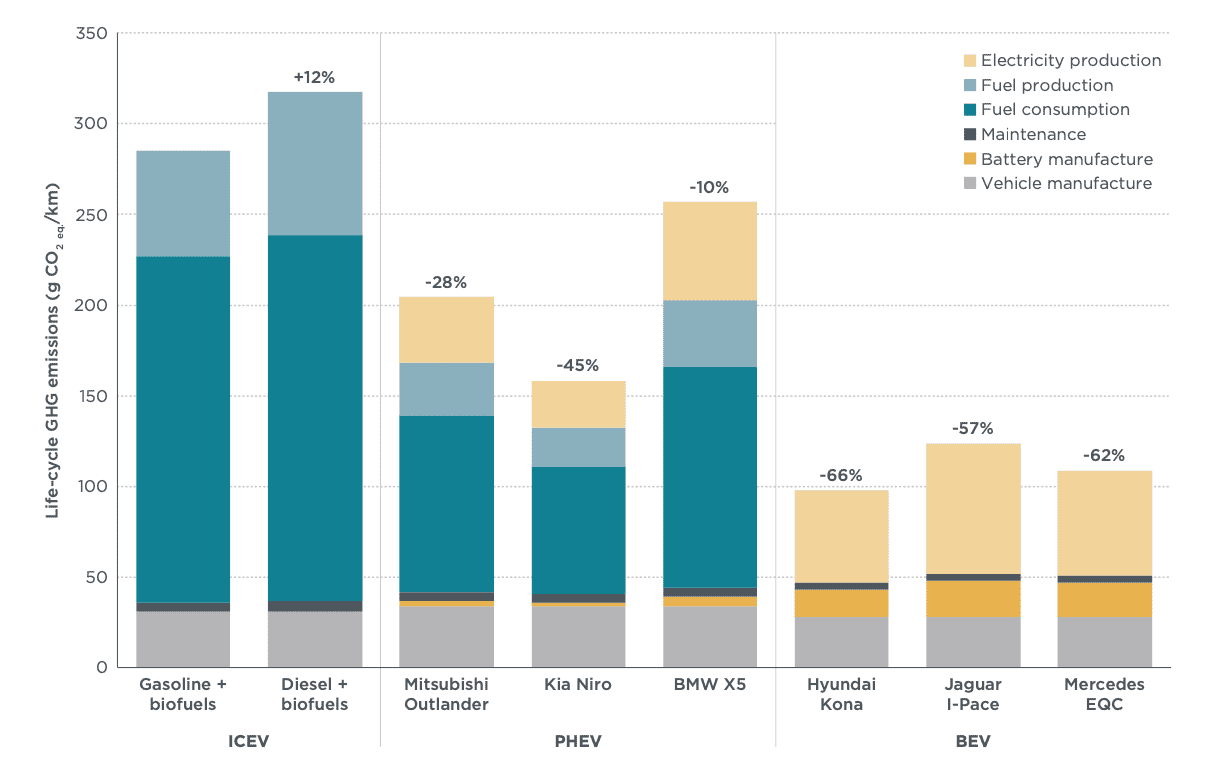
What I was asking myself was why wouldn't it be best if all vehicles were plug-in hybrids (PHEVs)? If all vehicles were small battery PHEVs then that would be great because the average person would be fine charging their EV and driving it the 30-40 miles per day, and they wouldn't have range anxiety and could always guarantee to make it to a charger/home, and we would need to mine much less batteries. The PHEVs could be like the BMW i3 REx with a range extender designed to just get someone home, or it could be for the rare long trip. This is the ideal situation for the vast majority of people until the infrastructure is in place for fast charging and battery/car swapping. The question is why wouldn't we continue to have these PHEVs? Well, if we had all the infrastructure then the only reason to have a big battery is for performance or for the convenience of not having to charge so often on road trips, so in that case, the standard BMW i3 would be fine over the REx,
which is just more efficient because they just don't have to lug around dual powertrains. The emissions are more because gasoline and the second powertrain increases end-of-life emissions, but the BMW i3 REx is 264lbs heavier than the i3 because it has a motor, fuel tank, fuel lines, etc., so even if someone never used the "just in case, rainy day" powertrain, and we didn't include that powertrain's end-of-life emissions, a PHEV is still going to be worse than a BEV because the car is carrying the extra weight of a second powertrain. Even if a PHEV increased its battery only range, a BEV version would be better, given the infrastructure to support its range.
Hopefully that clarified my thoughts. I'm guilting of assuming people can read my mind to understand my cryptic and confusing statements.