I recommend installing a ring terminal fused SAE connector for easily connecting your chargers. This is preferable to leaving alligator clips attached to your race car. My charge connectors poke out of the hood cowl.

And I also use a 25 foot SAE extension cable. This allows me to run my cables outdoors without having my chargers exposed. Since the connections are fused, I have less to worry about with short-circuiting.

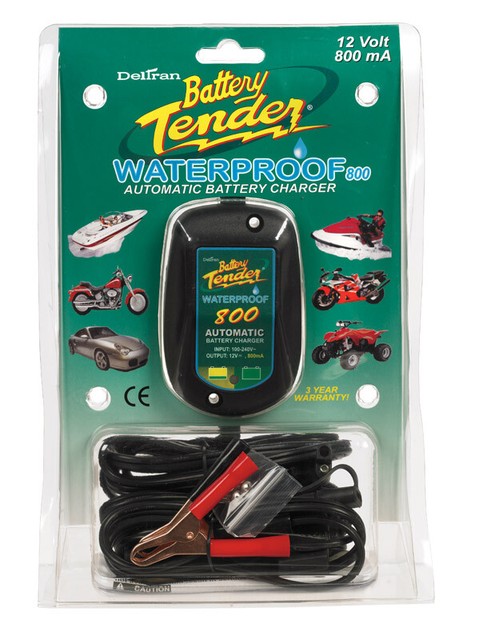
The "Battery Tender" brand waterproof chargers are the best for long-term maintaining. They are waterproof, and mine has lasted 20 years outdoors. They charge at about 10 watts, and maintain your battery at a float charge.
The chinese branded battery chargers are pretty great to own too. I have a Foxsur charger that can do both 12v and 24v charging, at 6 amp. Or 60-70 watts on a 12v battery. I plug my car up to this charger 30 min before starting the car every day, and it definitely puts some juice into the battery - I figure this helps somewhat so I do it routinely.

Another thing to note is avoid old "heavy duty" battery chargers like the kind grandpa had in his garage he bought from Sears 35 years ago. Example is the one my grandad had, that when I plugged in it boiled my car battery at 15.5 volts.

These older chargers have poor voltage regulation. and will boil your battery at 15+ volts and can hurt electronics. It almost fried my truck's electronics before I started looking into it and running a voltmeter on it. Having a good voltmeter is a handy tool for checking battery health.