Quote:
Originally Posted by FR-S2GT86

I'm speaking of what we as consumers can do to improve our EXISTING FI systems. With what I am describing, there are no electronics, no electrical connections and no batteries involved. It's purely mechanical. This would be something a home mechanic would be able to piece together with existing parts that are already out on the market.
You're talking about something that would have to be mass-produced by a vehicle manufacturer that adds electric motors, additional batteries and a redesigned charging system. Why turn mechanical energy into electrical energy just to turn it back to mechanical energy, when the first two steps can be eliminated?
The first video you posted above is addressing turbo lag, I'm addressing supercharger parasitic load of an already existing and installed supercharger unit which eliminates the lag in the first place.
The second video seems to be focusing mostly on fuel efficiency and regenerative electrical production, I'm addressing performance by freeing up the power and torque at high RPM's which would normally be needed of your engine by the supercharger and that you are already producing anyways, to make it available to the drive train instead. (Besides, would you really ever want anything designed by Chrysler/Fiat to be bolted up to your engine?)
|
What you’re proposing would require a lot of customization and cost for little gain, which is why I mentioned manufacturers. They care more about 3 mpg loss or gain in fuel economy (hypothetical) or the warranty of a supercharger or managing excess heat, while keeping costs and packaging manageable. Most people would rather add more cooling capacity and call it a day or switch to a turbo system than retrofit a custom exhaust manifold, custom half a turbo with output shaft, gear and belt and everything else. I get the idea of using wasted exhaust gasses to help spin a belt, so the parasitic energy from the supercharger is balanced out, but your setup is so close to a turbocharged setup that dual charging seems easier and cheaper to do for the lay person, and it would probably outperform your setup in other aspects. For instance, that same exhaust energy could generate boost and thus horsepower probably more efficiently than it could assisting with driving a belt.
Also the point was to mention inherent benefits and drawbacks to each system. I wasn’t quantifying the impact of any of these things.
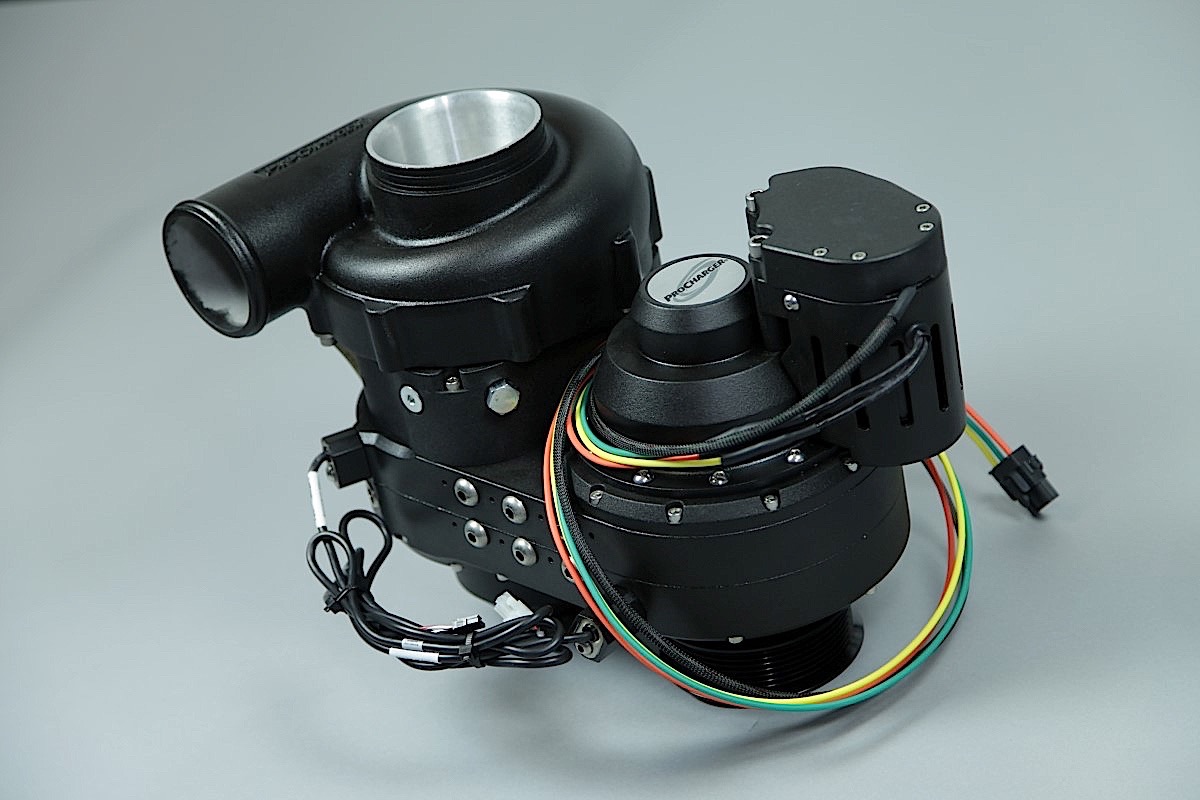
The cheapest supercharger solution would be to buy a variable pulley supercharger like in the video above and build custom brackets since no one is offering an off-the-shelf kit for the 86. I posted a video from Torotrak, but Procharger also has a CVT-like supercharger:
https://www.enginelabs.com/news/insi...ng-technology/
Just FYI, many other manufacturers are using BAS setups like Audi. Obviously, such systems could be custom added to any vehicle, but these are more for OEMs, which again, is what I assumed you were referring to in a hypothetical situation; I didn’t think you were thinking someone would actually build something one-off for their setup in a cost-beneficial way.