Quote:
Originally Posted by Calum

Gotta be honest, I find that really hard to believe. A turbo should be noticeably more power, with the same level of tune and octane, when compared to a super charger.
|
Just to add to what Mike said:
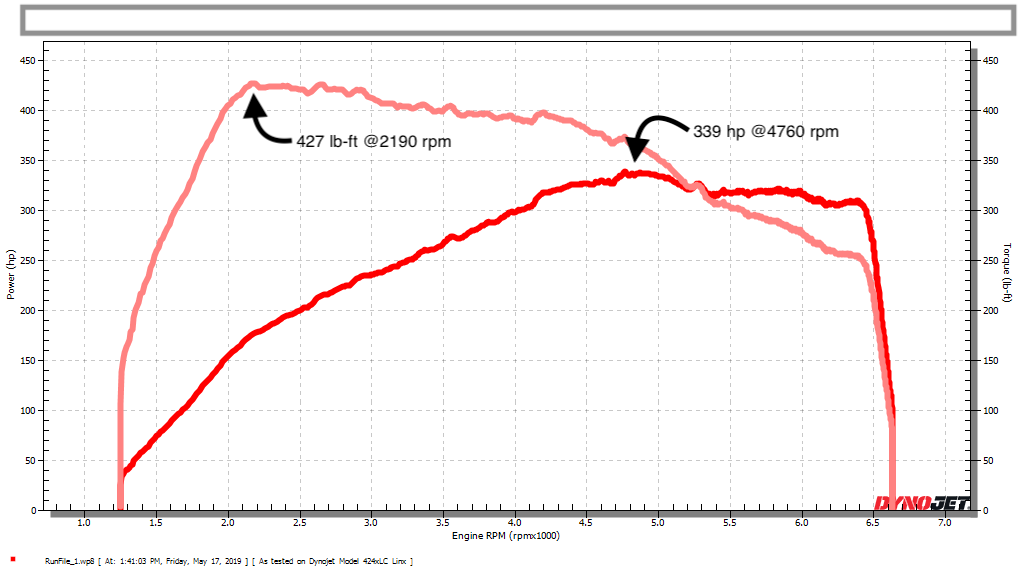
The TVS 1320 is listed on Eaton's website as ideal for 3.0-4.5L engines. My wife's Audi Q5 uses the same Eaton TVS1320, and it is a 3.0L V6. Cosworth uses the TVS 900 on the FA20. The point is the supercharger is relatively large for this platform and really doesn't hit its stride until higher boost levels. While torque does slightly drop off, the hp continues to rise to redline. Below is a Harrop kit on E85 at a bar of boost.
 https://www.eaton.com/us/en-us/catal...tvs-r1320.html
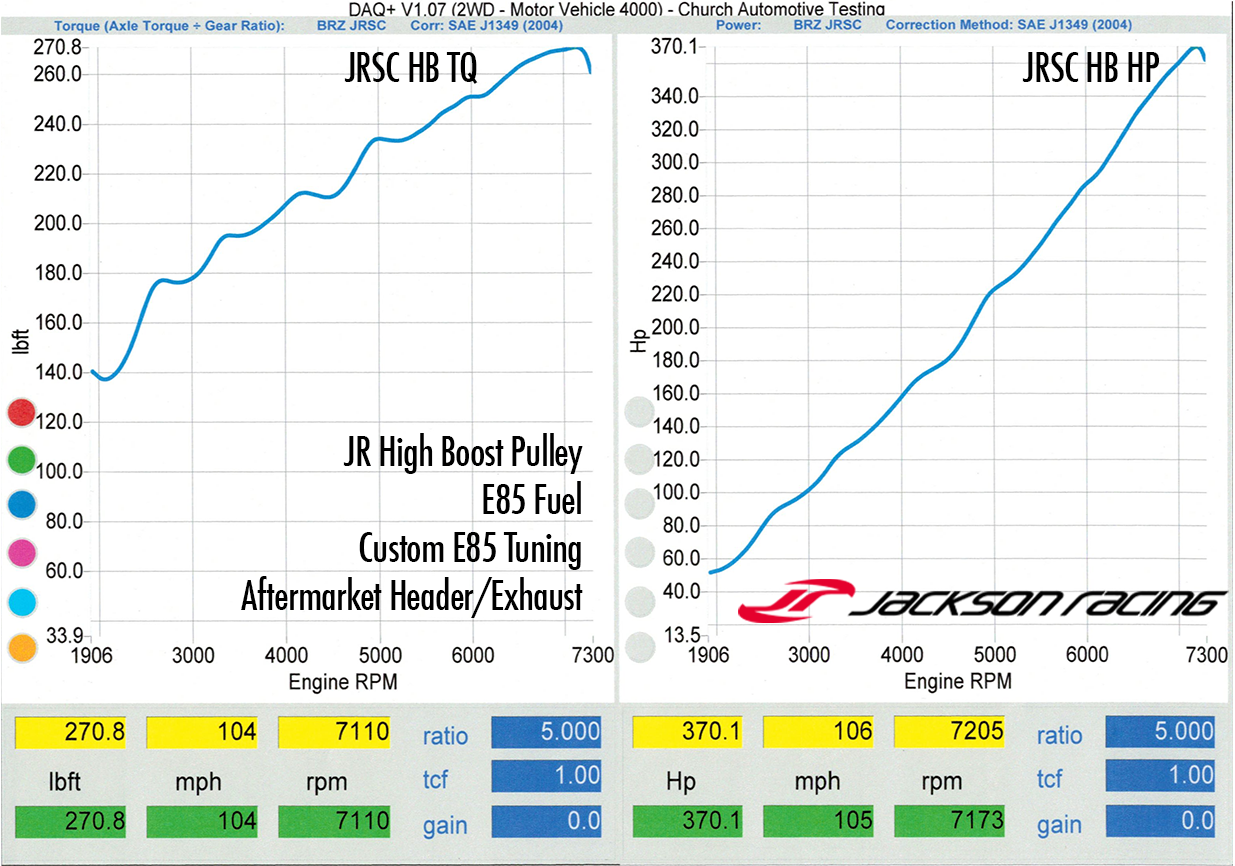
The JRSC is as you know a centrifugal supercharger, so it'll be building more on the top end. If you get the C38 or don't max out the C30 then it should pull to redline and not drop off. The C30 is at 96% of max on the high boost pulley. See below.
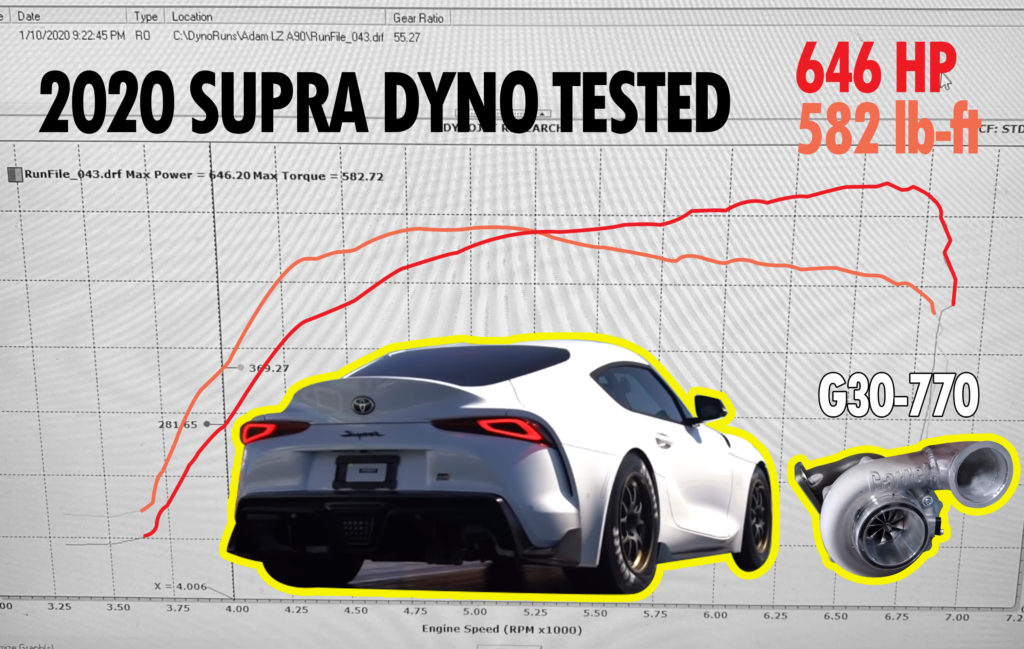
For this A90 Supra example, the stock turbo is small, so torque rises very fast and then it falls off, as the turbo is likely restricting the engine. Lots of torque down low, but not a whole lot of peak horsepower. In fact, peak hp is less than peak torque. Add a larger turbo in the next graph, and we get some rpm delay before torque hits due to boost threshold and the torque curve looks more flat with a power curve that pulls more to redline. Now, peak horsepower is more than torque. Add an even larger turbo and the boost threshold is significant, so the curve starts looking like a JRSC curve where torque takes time to ramp up, and it would look even more like one if they didn't limit boost there.
I don't know what Mike is doing, but it is entirely possible to design a system where the turbo makes peak torque down low, but falls off, such that it hits the same peak boost of 9psi as a supercharger, but it does 9 psi at 4k vs 7k, so the supercharger has the same or even more peak horsepower because they are making more torque at higher rpms, yet the turbo might have more area under the curve, especially down low.