So let's talk about
AXLES.
I've seen threads about axle failure being caused by lowering your car. I suspect it may be a false correlation.
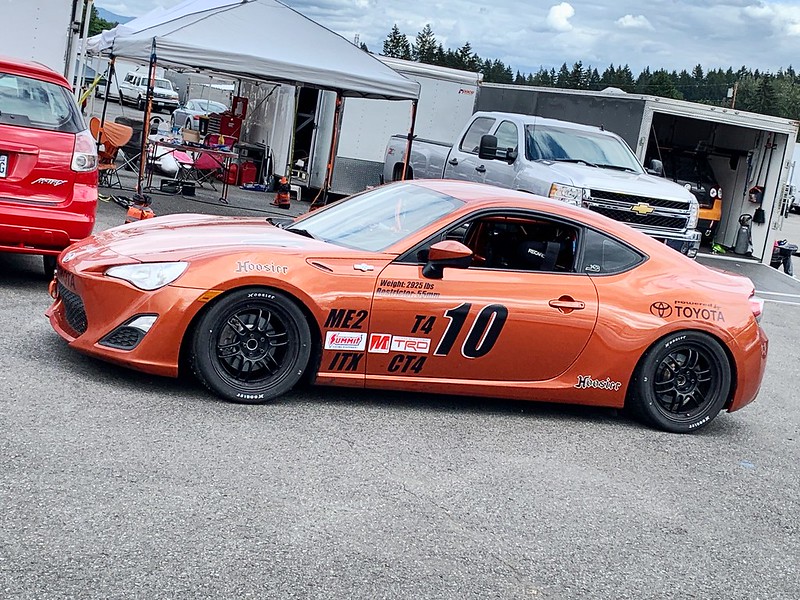
As you can tell, my car is very low.
From the ground to the corner of the pinchweld and the body, I'm at 5" ride height in the rear(this is how it's measured per the GCR).
The OEM Axle I pulled off the car (That did NOT fail, but the boot got ripped) shows the Balls, Runner, Cage are entirely fine and only the grooves in the cup show scoring which I attribute to the axle doing a full race after spewing the grease out (lack of lubrication).

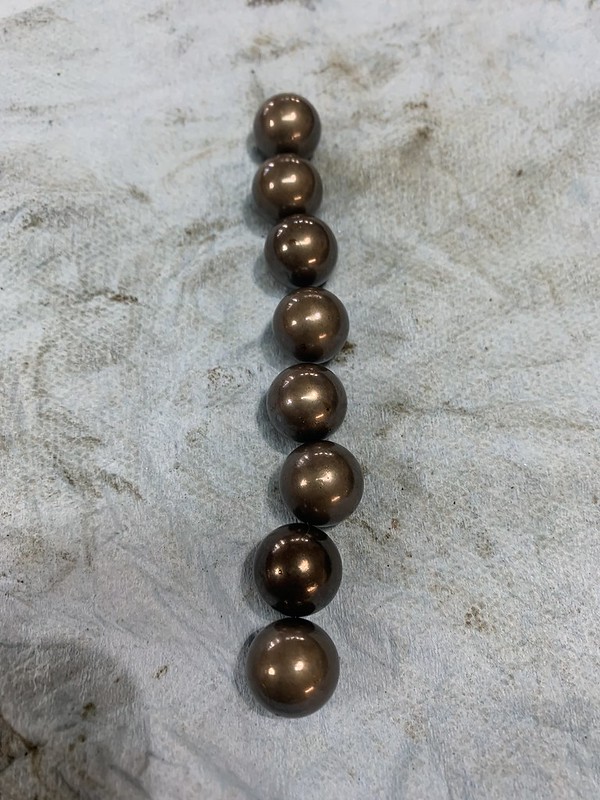

The important thing to note about this image is that this CV axle is stock from 2012. Has 87K street miles and a few track days - plus all of last years race season on it. Because it has the scoring on 1 side of the groove, it means I can relube/reboot it and use it on the opposite side as a spare.
The wear patterns show no sign of component failure cause by abuse, excessive axle angle - really only signs of lubrication failure.
I posit that our OEM axles fail when we lower our cars and that it occurs on the driver side inner CV more often - has more to do with
heat more than with lowering. I would guess that lowering the car may cause the CV to produce more heat but how much is unknown and I suspect it's pretty small. I've raced FWD cars for over a decade and put CV joints through WAY more angle and abuse than what our CVs experience.
Where's the extra heat?
Lowering a car reduces the airflow that passes by the exhaust piping, the CV joint and the differential. Also, most lowered cars have another thing in common - aftermarket exhaust. With larger piping or different routing that puts the hot pipe even closer to the CV joint. Between the lack of airflow, the heat from the diff and the added heat from the exhaust piping - the OEM grease in the CV cup is overwhelmed, deteriorating and eventually failing to do the job.
Last night I came home with 2 used OEM axles from a pick and pull and proceeded to pull them apart to replace the grease. The grease on the OUTER CV was like new. The INNER CV grease poured out like a 50wt motor oil, was brown and totally deteriorated. I'm glad the cups didn't have any scoring. The axles that came off my car were similar - the grease on the outside joint was way better looking than the inside - I don't even feel need to touch the outside CV grease (but I did, of course).
So how do I overcome the heat?! Well - I kind of don't. Instead I do 2 things: 1) Use grease that handle the heat range and 2) allow the boot to breath and hot air to escape (keep the boot from ballooning).
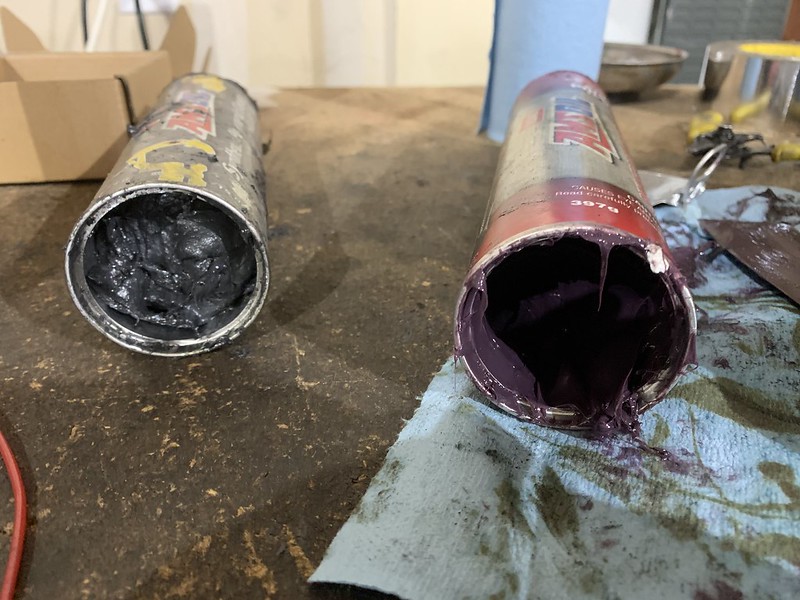
Grease: I use the Amsoil Polymeric NLGI#2. Either the purple stuff or the gray "off road" stuff that has 5% moly in it.


Breather/vent:


Due to centrifugal forces and the angle of the shaft coming from the inner CV (angled upward), the grease doesn't exit the tube.
I used to run OEM or auto store axles when racing Hondas (unvented) and I always replaced their grease with the Amsoil grease and I never had axle failure from inadequate lubrication again. I should have done this when I converted the FRS into a race car - but here we are.... "learning".