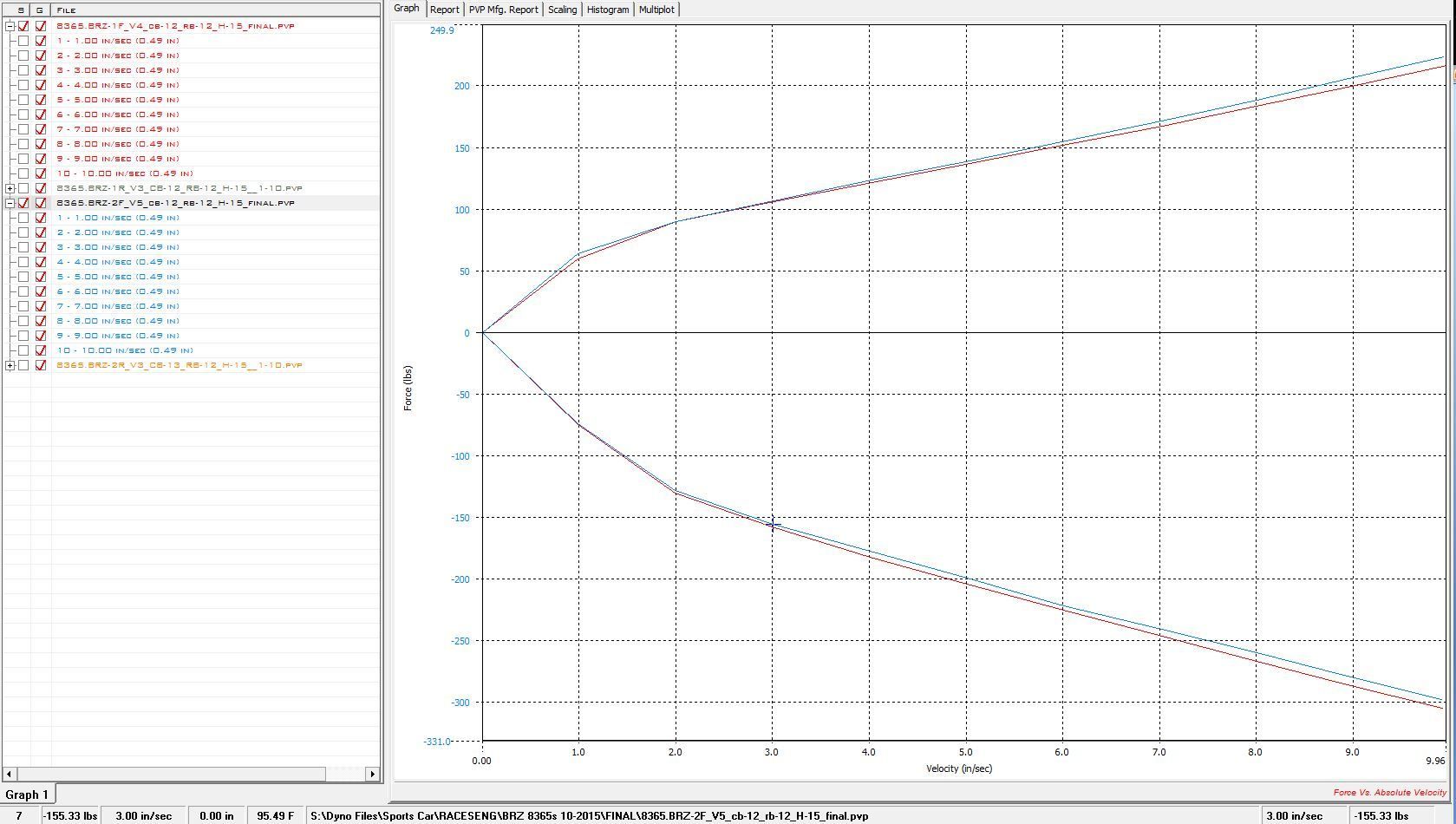
Almost every dyno graph you see is a PVP type graph that takes peak velocity force measurements at each speed increment (usually 1 thru 10 in/sec in 1 in/sec intervals) and just connects the dots to make your line. This gives you a good idea of general forces the damper is creating and is the predominate way Penske matches dampers unless we're doing something special. PVP's are useless for regressive curves for example.
What you don't normally get to see for various reasons are the individual CVP graphs which show far more detail about what is going on with the damper. Typically when we back to back test a competitors stuff, we'll match the PVPs but the CVP tells the story of why the Penske has more grip.
Case in point, here are the Raceseng initial front builds we finished yesterday.
10 in/sec PVP to match both fronts.... nothing special going on here
10 in/sec CVP of both fronts...
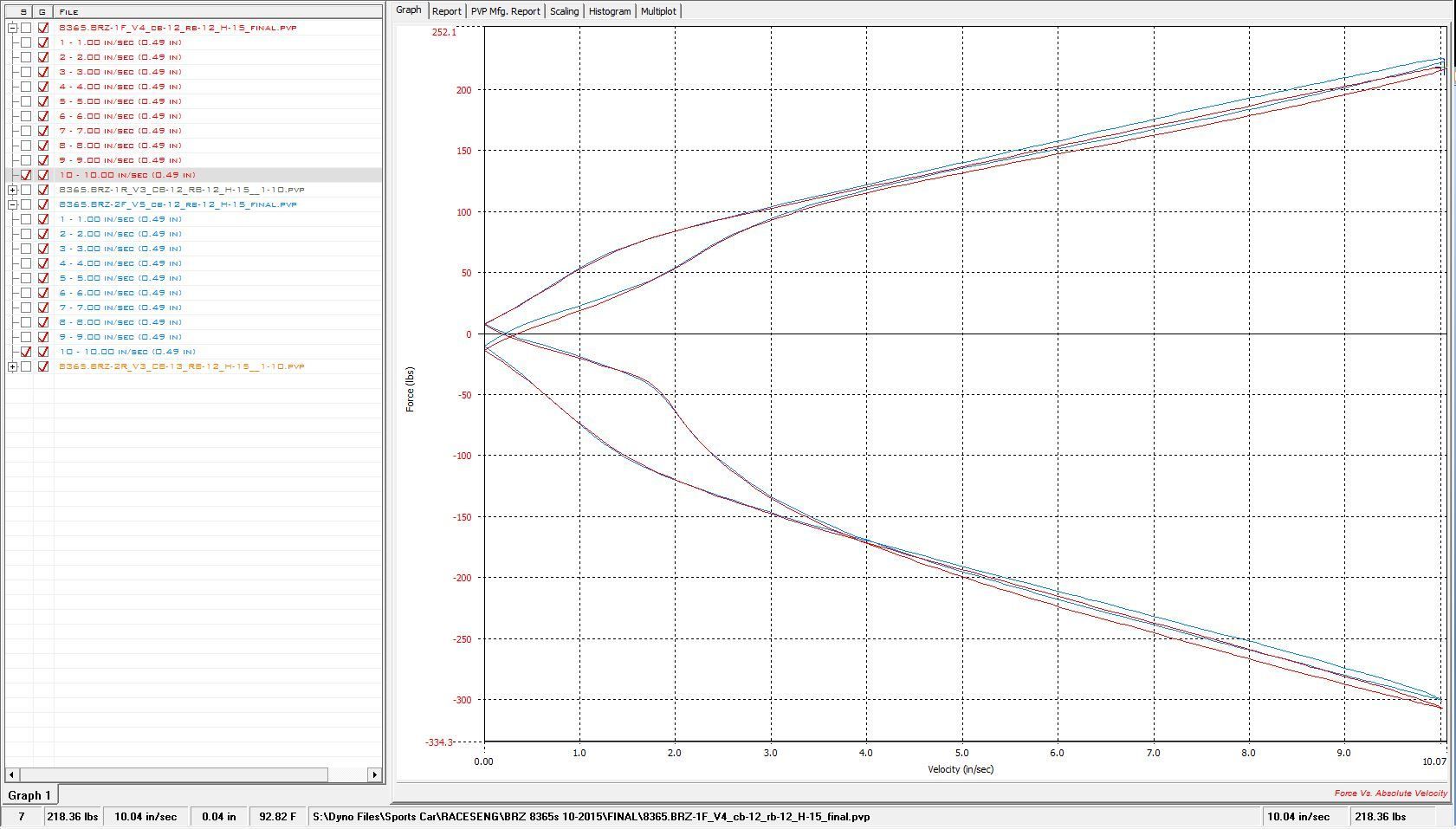
Big difference. Some might confuse the low speed region with a shock that has hysteresis even though the high speed region doesn't have any and the zero points are very close to zero. What you're actually seeing is the effect from cut piston bands on this build which can improve grip by limiting damper force at the initial onset of movement. By allowing the piston band to float tens of thousands of an inch in the piston, you delay a tune-able amount of fluid flow through the piston and shims thereby providing a very supple region for your tire to do what it needs to do.
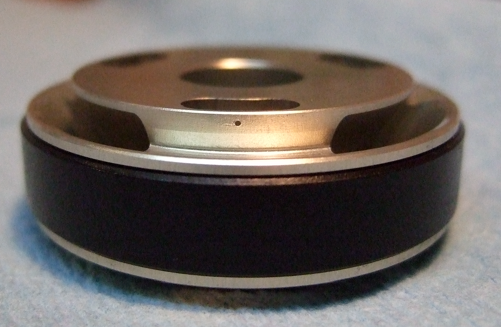
If you aren't aware, the piston band is the graphite piece surrounding the main piston and contacting the inner bore of the damper body.
Its the big black piece here.
This is one of the many reasons we say, don't be scared, call us to talk about your build. There are too many things to account for and you shouldn't be able to purchase $3000+ dampers from a drop down list on a website.
Looking forward to on-track testing with Raceseng very soon and if I can find the time we'll put it up against my Vette!
