Quote:
Originally Posted by BRZR1

What's next Fuel injection delete for those that want to go Carburetor?!?!?
Deleting the Direct injection doesn't serve any practical purpose (other than allowing for easier tuning for those tuners who fail to understand how to tune Direct Injection).
ABSURD!!
|
You mean like when fuel injection first came out and the best thing to do for power, reliability, and racing was to swap a carb back on?
I assume you think I did this because I don't know how to tune a DI car, but that's far from the truth. I initially tuned this car with the factory ECU and DI. I then replaced the factory ECU with a MoTeC M142 for development purposes and data collection. I then tested with and without the DI extensively. I have written custom firmware to control DI cars on the M1 platform so not only do I understand the tuning I understand the fundamental operation down to the actual fueling calculations and I/O logic. I even wrote extra maps and control strategies for the DI just to give it every chance.
When you say deleting the DI serves no practical purpose I have to laugh, here's a few you can't even debate.
1) Weight reduction: In a serious race effort weight is hugely important, the lightest cars out there don't get that way by removing one 500lb object, they remove hundreds of objects that weigh a couple ounces. This system is actually pretty heavy considering.
2) Reliability: Sure if everything is perfect the DI can work perfectly fine and we have plenty of customers running it with no issue. On the other hand removing the system removes no less than 10 potential points of failure, two of which are some of the most common track failures hands down. Long term getting rid of the DI will help reduce cylinder wall wetting, ring wear, and damage to the bore surface.
3) Parasitic Loss & Cams: Removing the DI directly takes parasitic load off the cam, reduces chain stretch & wear, eliminates cam timing errors, etc. It also opens up the potential for custom cams from a variety of manufactures that otherwise wouldn't touch the platform.
4) RPM: For guys planning serious builds that want more RPM out of the motor the piston style DI pump is a major issue, I shouldn't even have to go into detail about why.
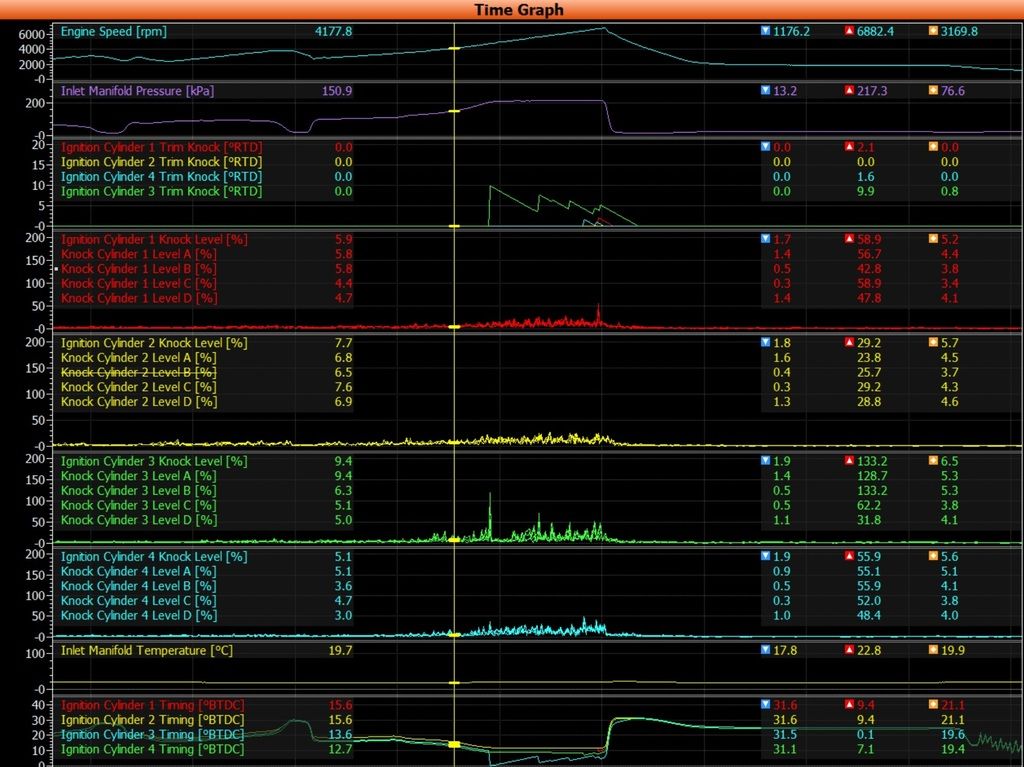
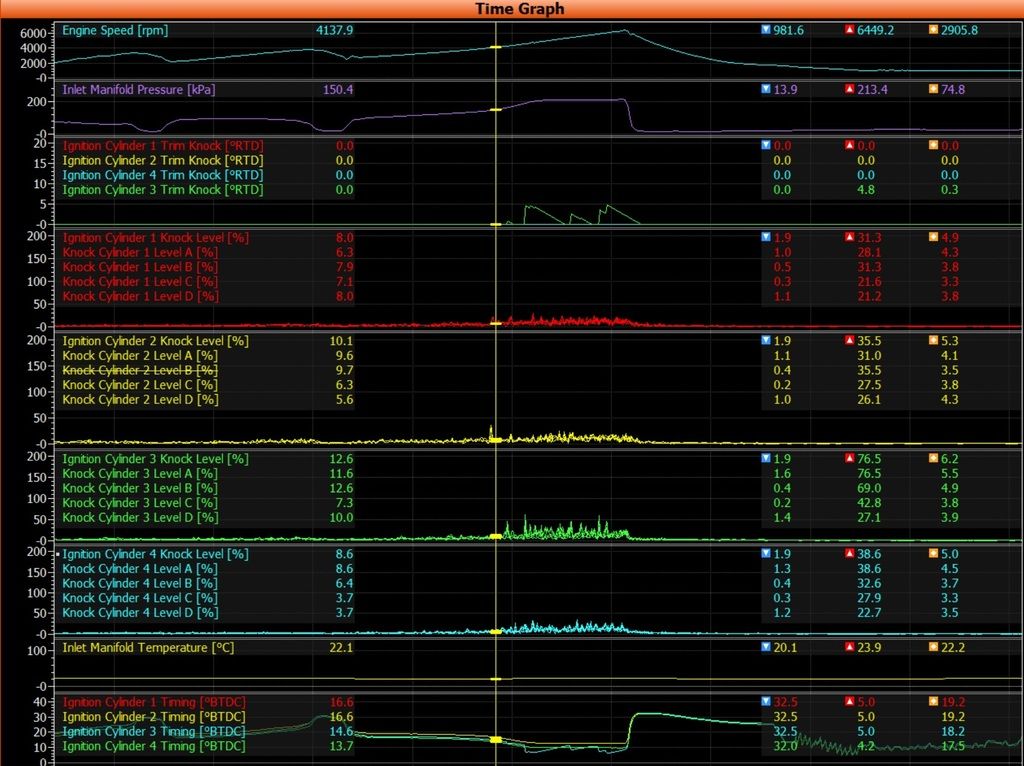
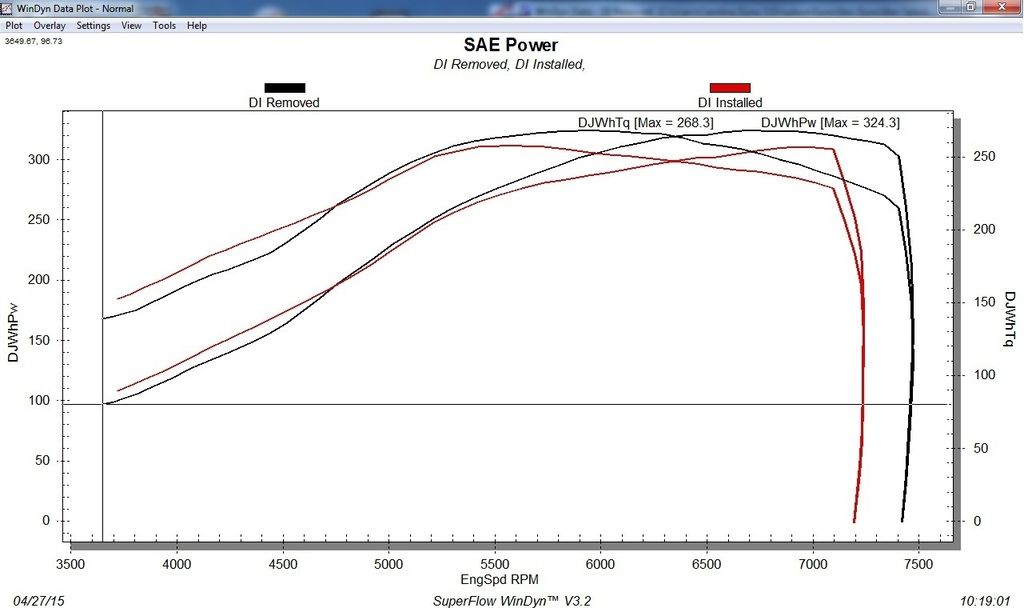
Our car with the current turbo setup made more power without the DI than with it and was less prone to knock even with more timing. Results below.
Graph of knock, timing, and load for DI/PI.
Graph of knock, timing, and load for PI only (note overall timing is 1 degree higher with less knock).
Here's the resulting difference in power, as you can see the main advantage to DI was a knock deterrent at low RPM which is expected.
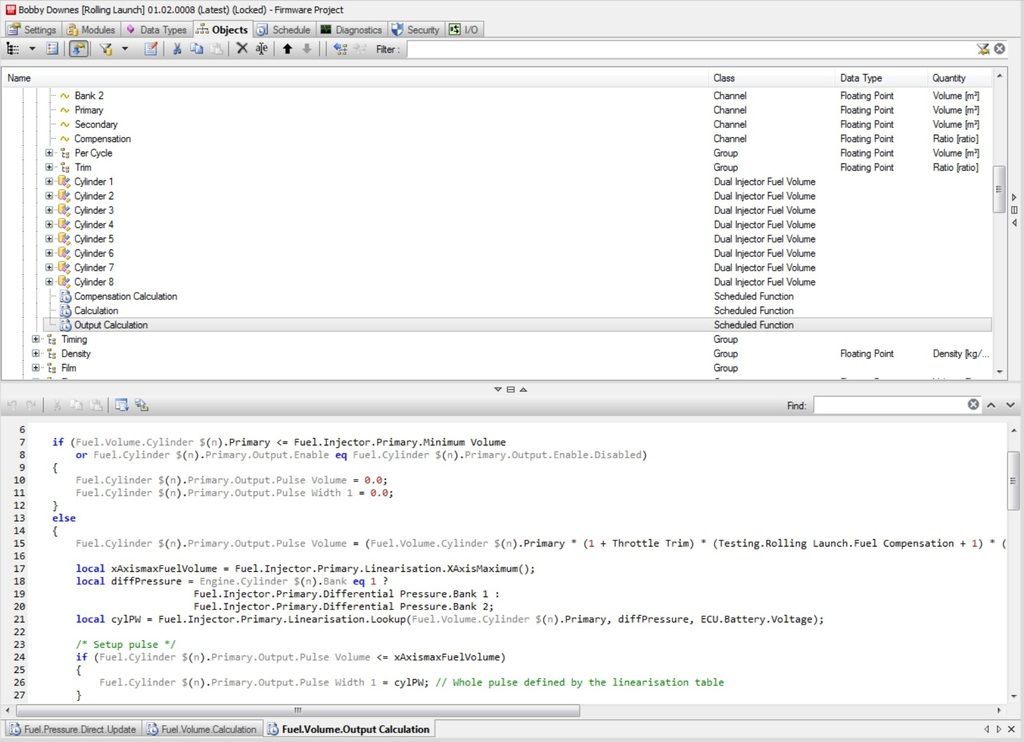
A small glimpse into the actual firmware controlling the DI/PI that we developed for a BMW race car. Keep in mind on this car we did the exact same DI vs PI test on this car and determined the DI was extremely beneficial to this application. The major difference in the two systems was the HPFP and the DI spray pattern. The N54 in this BMW makes 600whp on the DI alone and close to 700whp with just enough PI to keep the DI pump from losing pressure.
Video of the above car:
https://www.facebook.com/salaskoraci...40922/?theater
Forums like this are in a sad state, everyone wants to knock someone down despite having absolutely no experience in the field. Next time you post consider whether you are helping the community or just being a jackass to make yourself feel cool.
If you actually want to educate yourself on the topic there are numerous SAE papers that discuss in depth the pro's and con's of DI fuel systems in various applications.