Hi Everyone!
Since we are so in love with the Ohlins we want to give back to the community with this amazing option!! These are the perfect street and track coilovers! They are individually height adjustable, and also sprung perfectly for a smooth ride that will not chatter your teeth out! When you are on track the dampening is able to stiffen up to the performance that you need and accommodate all apexes that you will be hitting!
With the purchase of a set of Ohlins Road and Track Coilovers we will install them on your car!
Price: $3115+tax(with install)

This image has been resized. Click this bar to view the full image. The original image is sized 1920x1080.
This image has been resized. Click this bar to view the full image. The original image is sized 1920x1080.
This image has been resized. Click this bar to view the full image. The original image is sized 1920x1080.
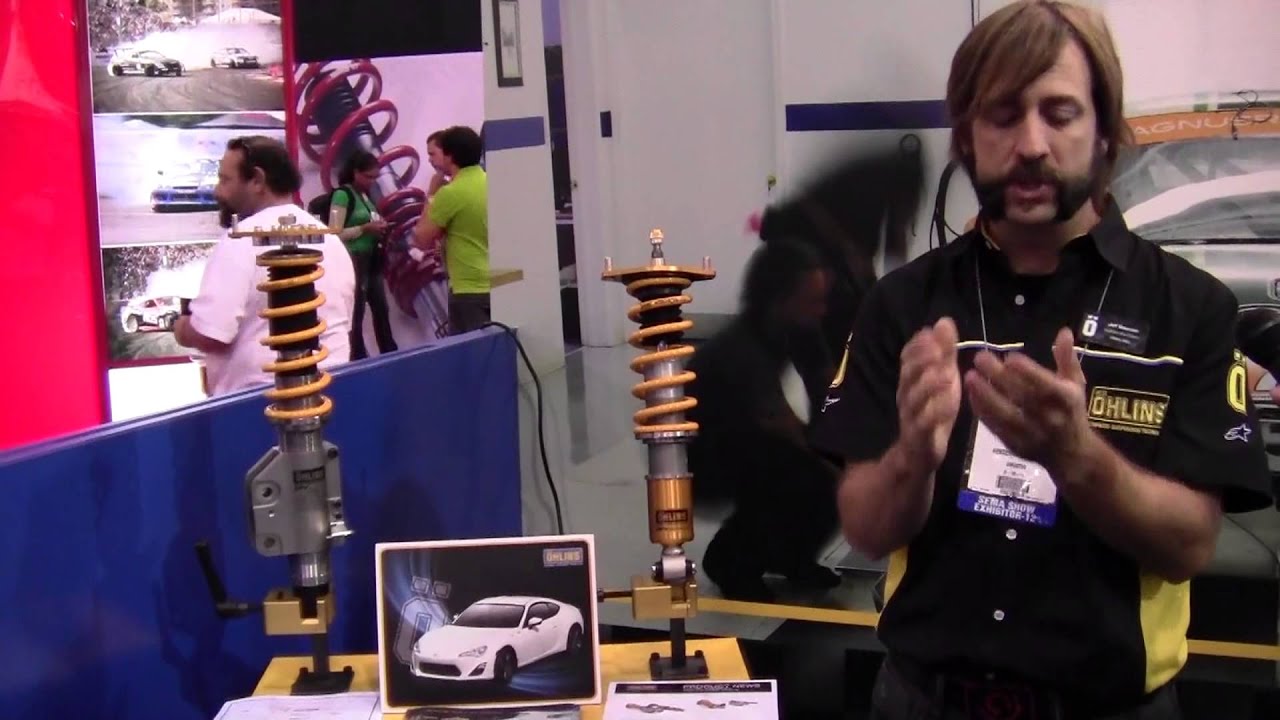
Check out this detailed explanation of the coilovers here!
Check out these reviews!
http://www.ft86club.com/forums/showthread.php?t=48679

Figure 1: (Compression flow) At low shaft speeds, oil flows mostly through the shaft jet bleed (lower dotted arrow). At higher shaft speeds, oil flows mostly through the compression ports in the piston (upper dotted arrow). At very high shaft speeds, or during sudden shaft accelerations, oil can also escape through the compression ports in the DFV, increasing comfort. Figure 2: (Rebound flow) At low shaft speeds, oil flows mostly through the shaft jet bleed (lower dotted arrow). At higher shaft speeds, oil flows mostly through the rebound ports in the piston (upper dotted arrow). At very high shaft speeds, or during sudden shaft accelerations, oil can also escape through the rebound ports in the DFV, maintaining tyre contact with the road.

Figure 3: (Vehicle – no DFV) Without DFV the oil can not flow through the piston quickly enough on the rebound stroke after hitting a bump, so the tyre is not able to stay in contact with the road.

Figure 4: (Vehicle – DFV technique) The DFV valve opens, letting the oil flow quicker through the piston on the rebound stroke after hitting a bump, enabling the tyre to stay in contact with the road.
Thanks,
Mike