This is always a hot button topic. I see widebands, any wideband really, as just another tool. This issue of "accuracy" is even more complicated than most people realize. The reasons are: backpressure issue, engine-out AFR vs exhaust stream AFR, and transient effects.
I've done some informal studies on this issue using lab data. I compared a Bosch LSU 4.9, a Denso Plus 5.1 limiting-current type wideband (similar to what's the front sensor on the FA20), and an emissions bench in a steady state. This particular engine was an n/a, and the data was running a series of steady-state points for a WOT run. Basic result: they were all within about 0.3:1 in most areas, but yes the Denso seemed to deviate a little at the richest AFR's. That's steady-state, lab conditions, enriched operation, no scavenging to speak of.
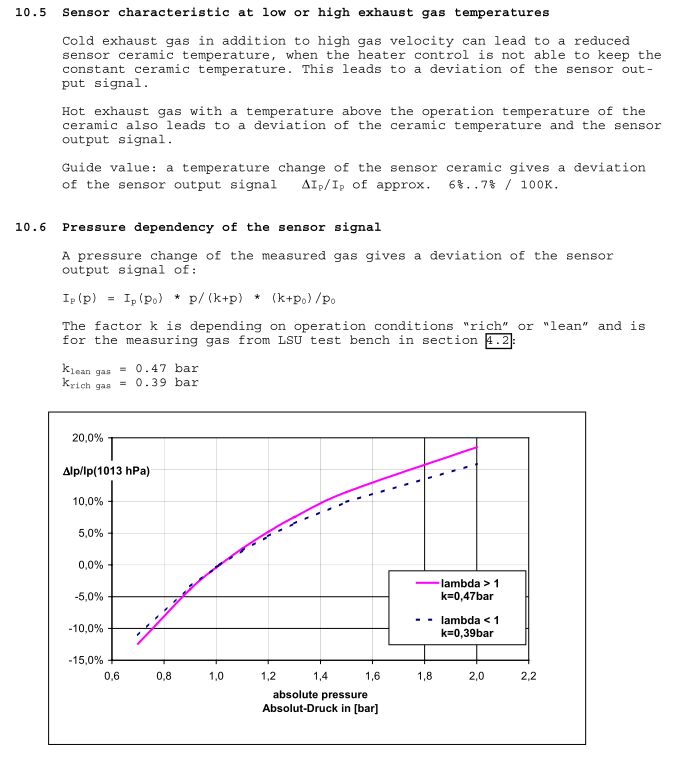
There are backpressure compensation curves to keep in consideration. AEM now offers a wideband with a backpressure sensor to use, which corrects the value based on the characteristic curve provided by Bosch. That's assuming you don't burn up the backpressure sensor.
Now here's where things get nuts: on a boosted engine, especially with a lot of scavenging. The wideband doesn't directly tell you what's going on in the cylinder. You can have a wideband read lean at the tailpipe, in the midpipe or wherever. But when you start looking at the fuel flow meters, the airflow meters, the emissions analyzer CO2%, O2%, and CO%, things get pretty tricky.
When you have overlap (especially with boost), fresh air gets thrown out the exhaust valve and is never trapped in the cylinder. It mixes with the CO and other gases. So literally the AFR changes as the gases are passing through the exhaust pipe. You can only see that with an emissions bench in a lab.
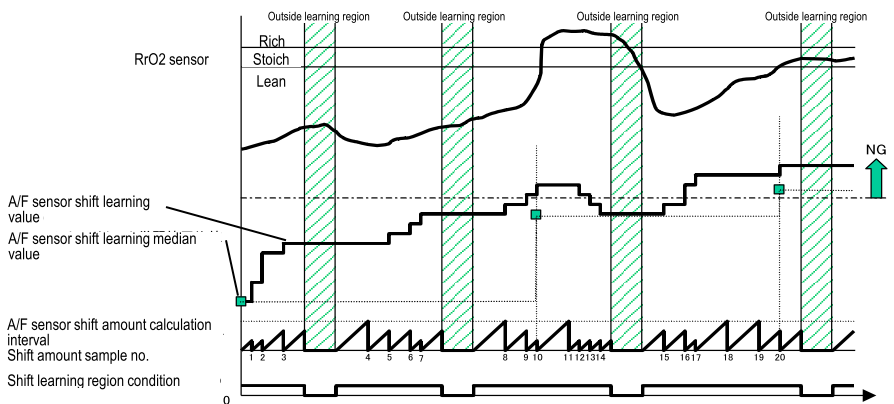
In an actual vehicle it gets tricky because those Denso A/F sensors are actually corrected by the rear o2 sensor located behind the cat. It basically uses the rear o2 sensor and an oxygen storage capacity model of the catalyst to compare what the front o2 sensor is reading and what it
should read, based on the response curve of the rear o2.
All these complicated effects are why I don't get too caught up in which one is right and which one is "wrong." I do have more faith in the Denso sensors than a lot of people do though.
See attachments with technical specs on Bosch wideband sensors, and an earlier Denso limiting-current type.