Quote:
Originally Posted by B-R-Z

I just bought some duplicolor Metalcast red and a can of duplicolor acrylic enamel clear coat. I planned on doing my tails this sunday but now I'm unsure if my clear coat will look ok, Im thinking of doing a test on maybe a soda bottle or something. Also, isn't 2-3 coats of paint\clear plenty? Multiple cans of both paints seems like a lot. I've been reading that urethane is the better clear to go with for durablility and gloss. Can anyone else chime in that has used acrylic and lmk how the finish\durability is?
Here's the clear that I bought: Amazon.com: Dupli-Color DA1692 Crystal Clear General Purpose Acrylic Enamel - 12 oz.: Automotive |
2k (aka 2 part -has a mixed in hardner-) urethane clear will always look better than any single part out of a rattle can. I spray lights all day and they look perfect with zero polishing. With a rattle can your going to have to spend a lot of time polishing the tailights to get the clear to shine.
Another benefit of doing automotive paint vs rattle can is by mixing the candy into the clear you can create more seamless finishes. If you do say one pass of VHT on a lense you will notice it is spotty until you have enough passes to make it solid. This is due to the way the rattle can dispenses the paint. You can do very light smoke no problem by just adding a few drops of black into your 2k automotive clearcoat.
To whomever posted about the clearcoat cracking the lens... that is simply because you are applying it too wet and the solvents in the car and soaking into the etched (sanded or scuffed) plastic eating away at them before it can dry. Counter it by making your first coats light!
As far as the question on prepping them. I find the best result it to FIRST clean them with dish soap/water followed by an automotive wax & grease remover. Normally we'd use the wax & grease remover after sanding them but some plastics used in tail-lights are really sensitive and will react to the cleaners. I then follow with a a through scuffing with a fine (gray) 3m scotch-brite pad. No need to use sand paper, can easily be done by hand. The scotch-brite is easy to hold and has some thickness making it easy to do contours and curves. After I scuff it I blow it off with an air gun and give it a final wipe with a tack cloth to remove any loose particles just before the first coat of paint.
Here is a comparison of non-prepped and prepped light. The haze is a visible indicator of tooth in the plastic or something for the paint to bite onto. LEAVE NO GLOSS/SHINE unless you want your paint to flake off...
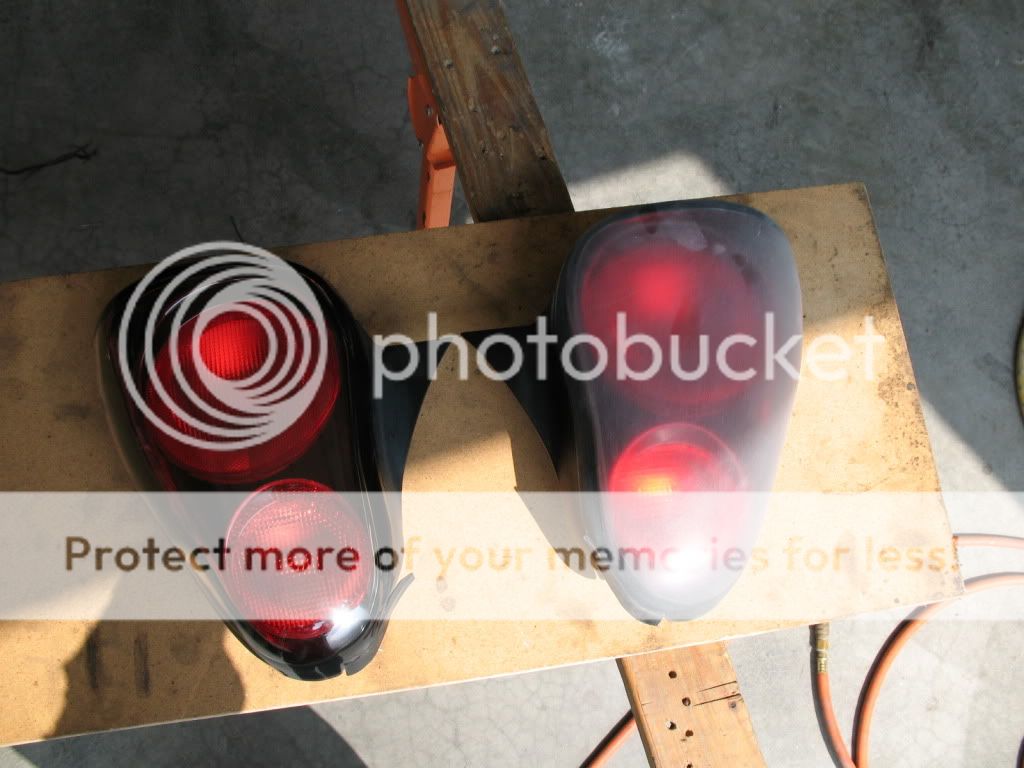
When you start painting I wouldn't ever tell anyone to sand between coats on a candy. The ONLY reason you should be sanding between coats is if you messed up be it a run in the paint or a big chunk fell into the paint. Paint, lets flash (dry,) wipe with tack cloth to get any particles, and then go onto the next coat. When you get to clear, if your rattle canning do a couple light passes and then lay it on thick. If you mess up stop, let it fully dry sand out the defect and then scuff the entire lens before resuming with your clearcoat.
Here is an example of how light you can go with just candy+mixed into clearcoat...
(light red)
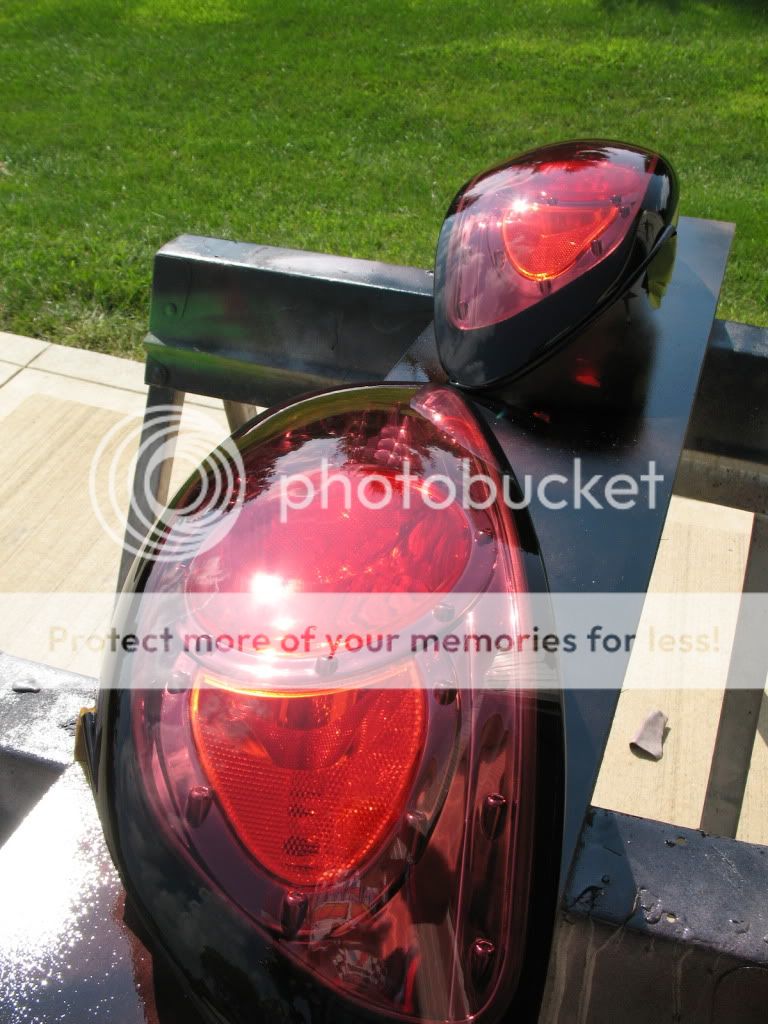
(even lighter!)
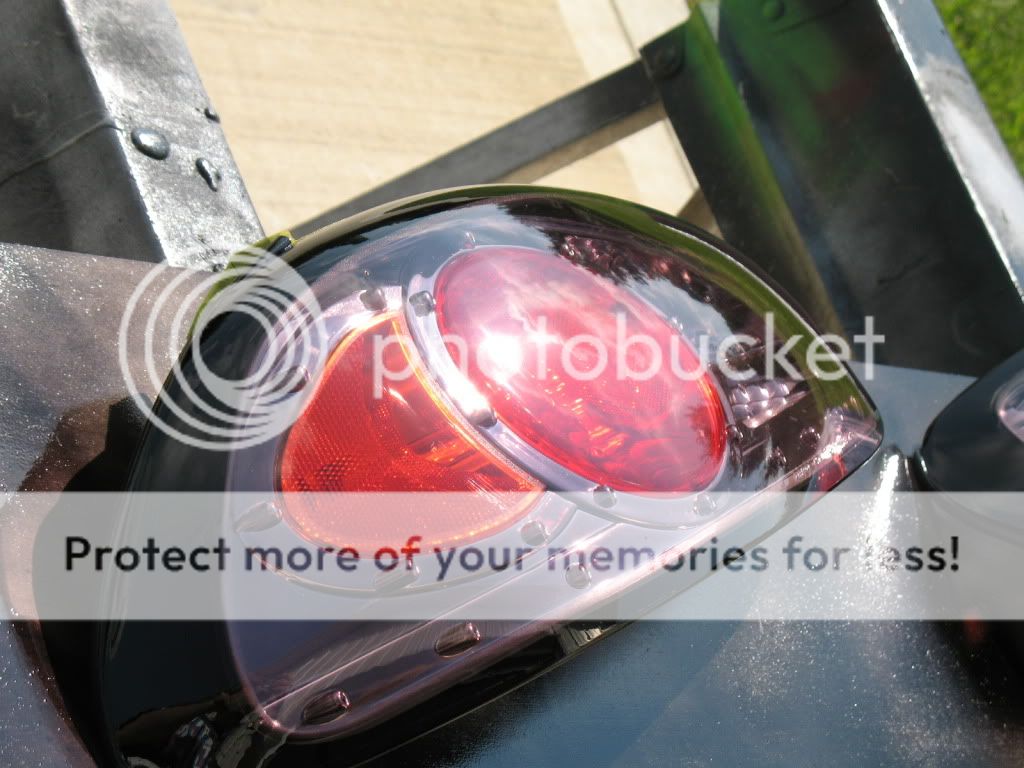
If anyone is interested in a set, I'll soon get my TOM's light installed and will smoke/red my old OEM ones and dump them cheap.