Hi guys,
Quick tutorial on how to remap Variable Valve Timing to minimize the torque dip in the stock FA20 power curve. Below is a dyno graph of a fully modded FRS comparing stock VVT mapping our revised VVT mapping. Of course, our maps and tuning software is all free to download off of website so for many of you, this post won't be news. For everyone else, i hope you find it at least a little bit interesting.
Stock vs. Revised VVT Mapping:
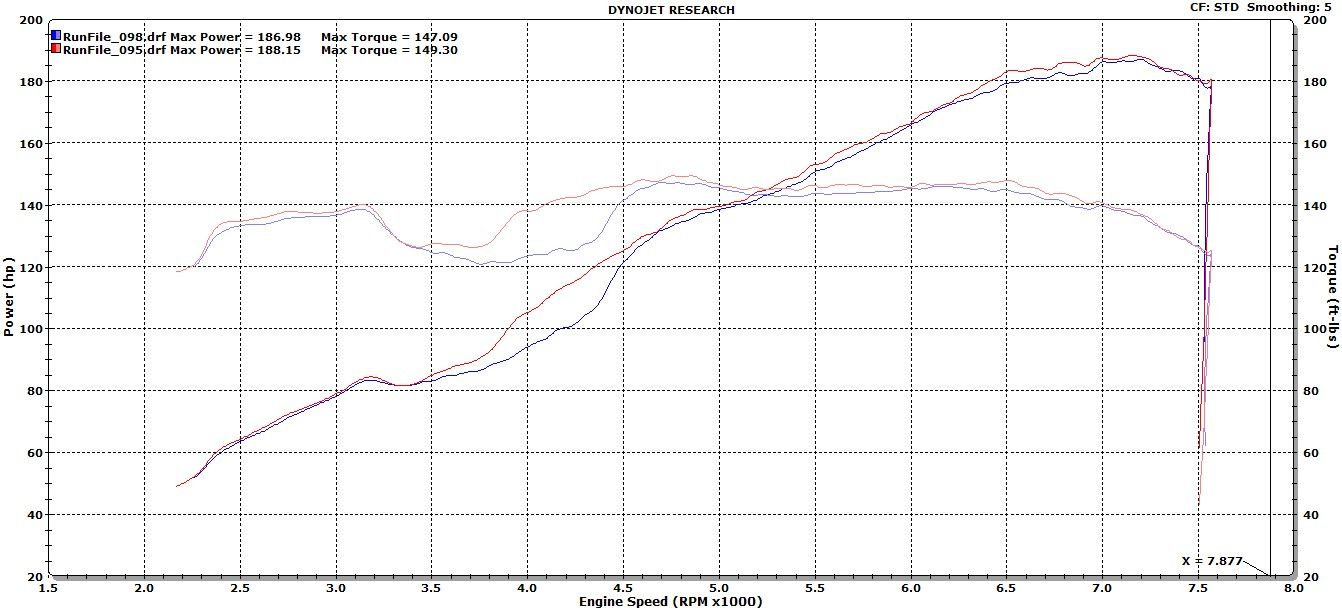
Pretty significant difference. Dip is much shorter in duration and not as deep. On the road, having nearly 20lbft of torque right where you use it the most really transforms the car. And it's easy to get. I'll disclose all the changes we make to the VVT maps.
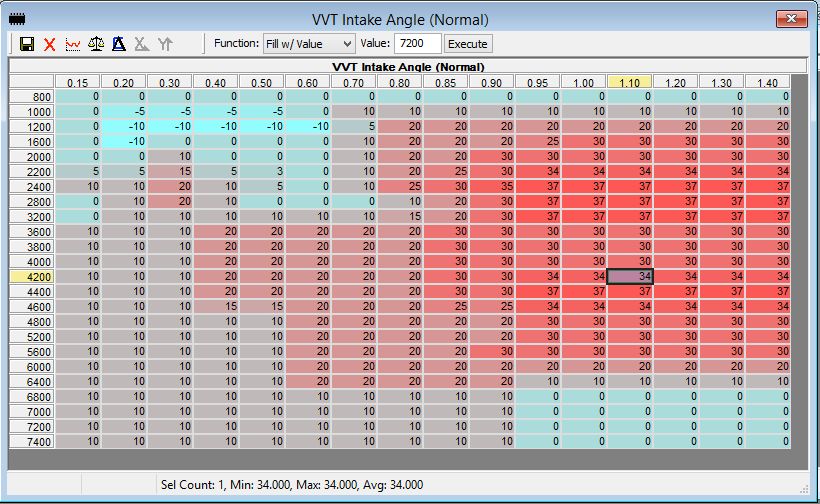
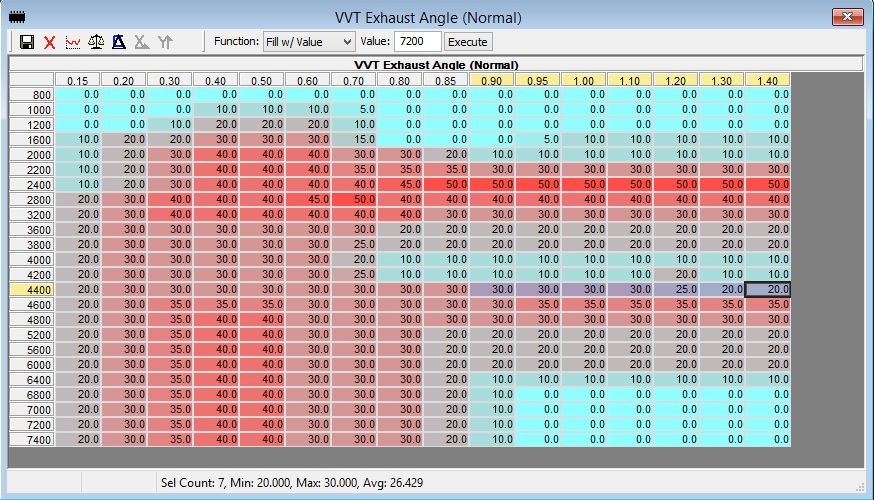
First a quick tutorial on how to read a map for those who haven't looked at this stuff before. The VVT maps are 23 (rows) x 16 (columns). The Y axis is RPM. The X axis is engine load. Engine load is defined in grams/revolution. It ranges from 0.15 to 1.4. For reference, a stock car running at sea level idles at around 0.2 (grams/rev). At full throttle it's around 0.8 at low RPM, ramping up to around 1.1 by 6000rpm and then back down to around 1.0 at 7500rpm. If you were to plot engine load by RPM you would see a shape that looks just like the torque curve. Not surprising because they both represent the engines VE (volumetric efficiency) curve.
With that out of the way, here are what the stock VVT maps look like...
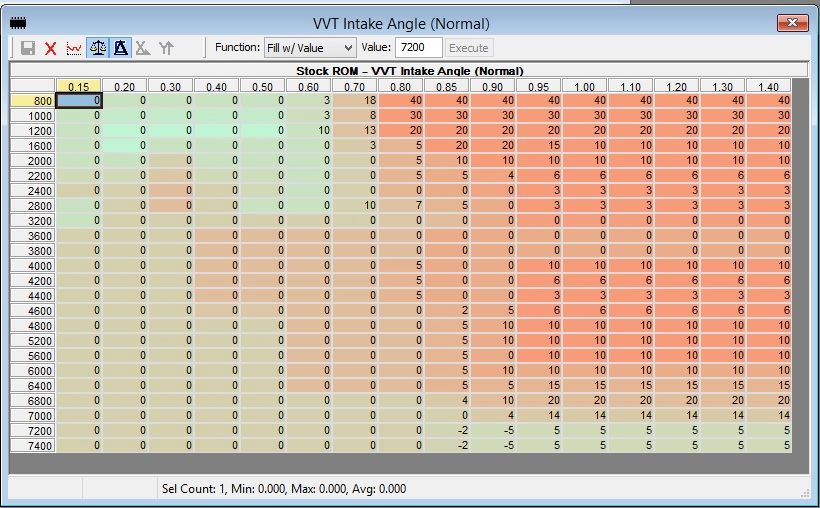
Stock Intake VVT:
Stock Exhaust VVT:
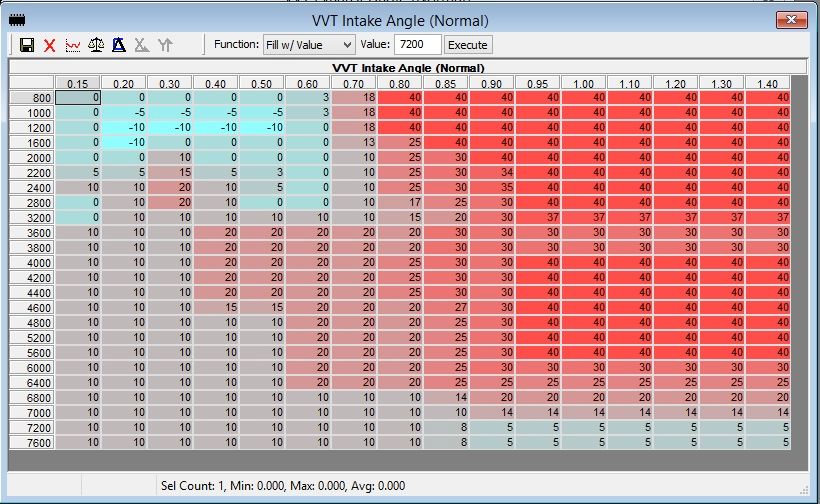
And now the modified VVT maps...
Modified Intake VVT:
Modified Exhaust VVT:
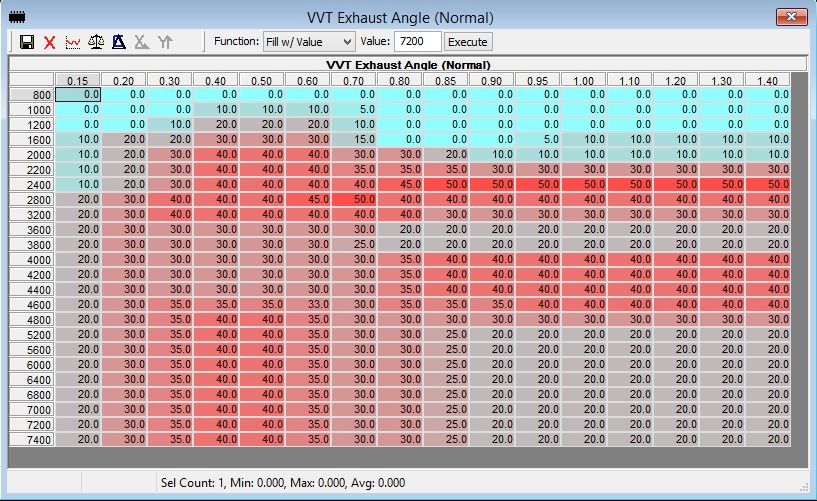
To make this easier to compare, below is a difference map showing the difference (duh) between the stock and modified maps.
Difference Intake VVT:
Difference Exhaust VVT:
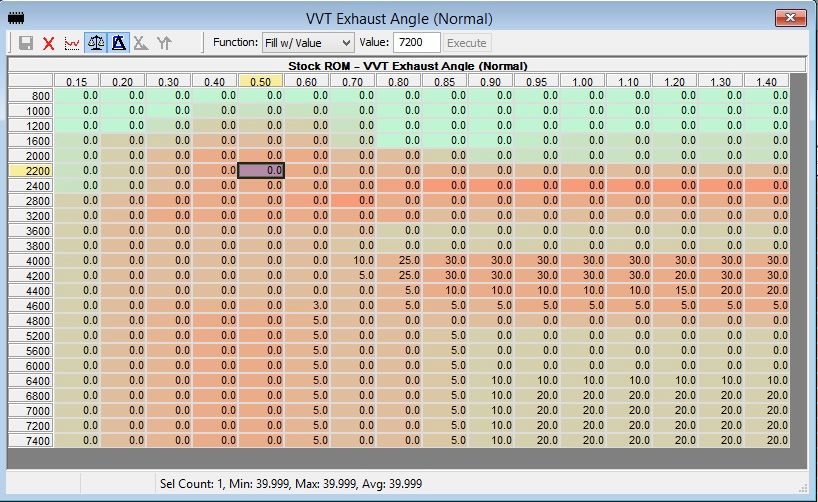
So you can see the we selectively advanced both Intake valve timing and exhaust valve time at different load/RPM points. Mind you, we only really tuned for max load power. There is also more gains to be had at partial throttle since the factory VVT tuning is geared towards fuel efficiency and low emissions at lower engine loads. It does this by recirculating exhaust. This sucks when it comes to cylinder temps, torque and knock tendency. But it at least gives us something to fix before the next map release

In the case of the FA20 engine, advancing the intake VVT maps helped pose a bit at all engine speeds expect between 3200-3800rpm. We found that the stock mapping was ideal here. The biggest power gains were at high RPM were opening the intake valve earlier in the intake stroke improved cylinder filling (and of course power!). But the intake VVT adjustments really didn't do too much to reduce the torque dip.
The exhaust VVT mapping, however, was the major contributor to filling in that torque dip. Advancing it aggressive between 4000 and 4400rpm, added huge amounts of torque. And advancing it a bit up top also helped a bit as well.
That's pretty much it. There is no real magic to tuning these engines. Just a lot of trial and error on the dyno to see what it likes; I think I spent at least 6 hours just trying different combinations of intake and exhaust VVT map adjustments before I ended up with what you see above. But the results are solid and repeatable. Feel free to use them for your custom tunes. I'm sure they can be tweaked a bit depending on mods. But they should be very good starting points. Looks like whatever strange mapping decisions Toyota/Subaru made to optimize emissions/fuel economy in the torque dip area are simple to resolve. And that makes all of us very happy
Also, I'd like to thank mad_sb for his tech threads. Specifically the one about VVT mapping. It provided us with a great starting point. But not having to pay by the hour for a dyno, does gives us a lot more time to fine tune things.